
Doctors prescribe generics every day. But do they really believe they work as well as brand-name drugs? The answer isn’t simple. Behind the prescription pad, many providers have doubts-some quiet, some loud-that shape how often they choose generics, and whether they even mention them to patients.
Why Some Doctors Still Doubt Generics
It’s easy to assume doctors trust generics because they’re cheaper and FDA-approved. But surveys show nearly one in four physicians still believe generic drugs are less effective or lower quality than brand-name versions. This isn’t just about cost-it’s about perception. Take levothyroxine, a thyroid medication. Many doctors refuse to switch patients from a brand like Synthroid to a generic, even though the FDA says they’re bioequivalent. Why? Because some patients report feeling worse after the switch. Doctors hear those stories. They remember the patient who came back with fatigue, weight gain, or heart palpitations. Even if the difference is minor or placebo-driven, the anecdote sticks. One doctor in a 2023 Reddit thread described switching a patient to a generic warfarin and watching their INR levels go haywire. That single case can haunt a provider for years. The problem isn’t always the drug. It’s the manufacturing. Generic makers aren’t required to use the same inactive ingredients as the brand. One generic thyroid pill might have a different filler than another. For patients with sensitivities-say, to lactose or dyes-that can cause real side effects. And because generics are made by dozens of different companies, quality can vary. One 2017 study found 57.8% of doctors worried about inconsistent manufacturing standards across generic brands.Who’s Most Skeptical?
Not all doctors feel the same way. The data shows clear patterns. Male physicians, especially those with over 10 years of experience, are significantly more likely to distrust generics than their female peers. Specialists-cardiologists, endocrinologists, neurologists-are also more hesitant than primary care doctors. Why? They treat complex, chronic conditions where small changes in drug levels can mean big consequences. A 0.5% difference in blood levels of a narrow-therapeutic-index drug like digoxin or cyclosporine can be dangerous. Age matters too. Doctors over 50 are more likely to have been trained in an era when generics were less regulated. Many learned their pharmacology before the FDA tightened bioequivalence rules. They remember the bad old days-when some generics really were unreliable. That memory lingers, even when science has moved on. Meanwhile, younger doctors and those in primary care are more open to generics. They’ve seen the data: generics work for hypertension, diabetes, depression. They’re under pressure to cut costs. And they’ve been exposed to more recent research.The Knowledge Gap
Here’s a startling stat: only 43.7% of primary care physicians correctly understood the FDA’s bioequivalence standard (80-125% of the brand’s absorption rate), even though 78.4% claimed they were familiar with it. That’s not just ignorance-it’s a dangerous mismatch between confidence and competence. Most doctors know generics are cheaper. Fewer know how they’re tested. Even fewer know that the FDA requires generics to have the same active ingredient, strength, dosage form, and route of administration as the brand. They don’t know that the same labs that test brand drugs also test generics. And they don’t know that generics are held to the same Good Manufacturing Practices. This gap isn’t accidental. Medical schools barely touch generics in the curriculum. Only 38.7% of U.S. medical schools include structured education on generic drug equivalence. Most doctors learn about them on the job-through a pharmacist’s quick note, a sales rep’s brochure, or a patient’s complaint. That’s not enough.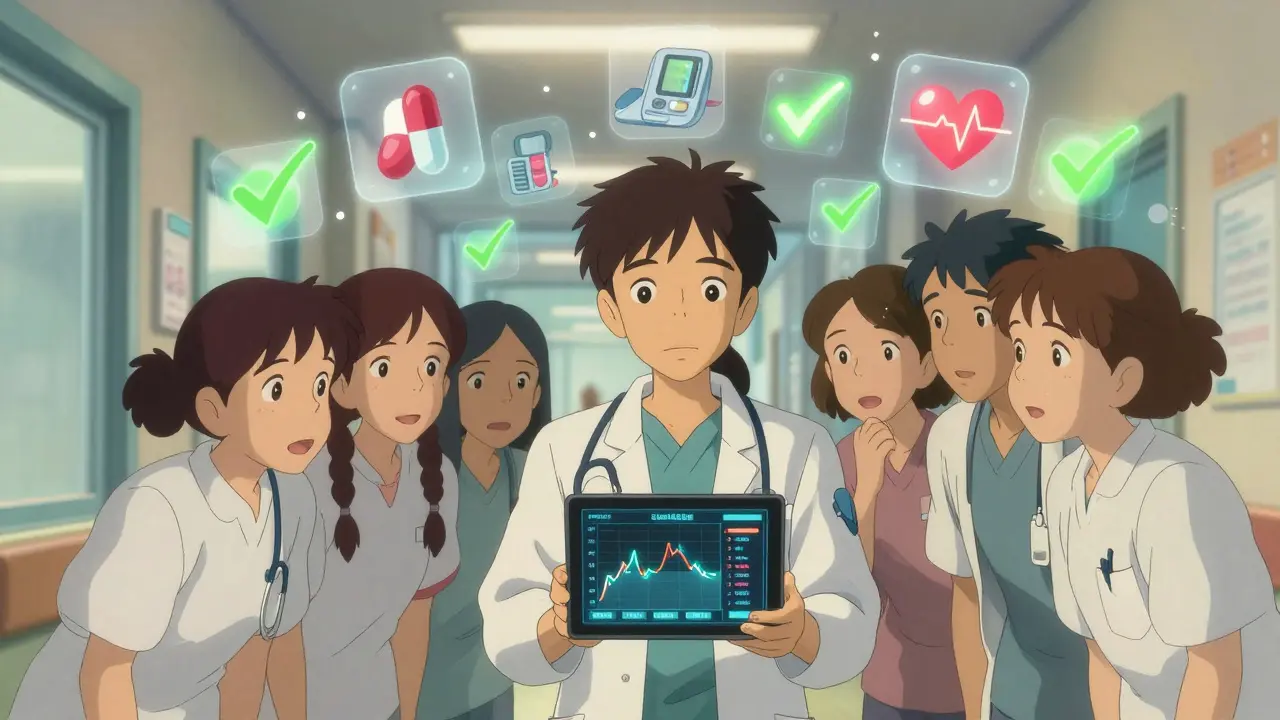
Why Patients Listen to Doctors-Not Pharmacies
Patients don’t decide on generics because a pharmacist says so. They decide because their doctor says so. Studies show 68.4% of patients rely on their doctor’s opinion when deciding whether to accept a generic. That means a doctor’s hesitation becomes a patient’s fear. In rural clinics, that fear turns into abandonment. One CDC study found 41.7% of patients stopped taking their medication altogether after being switched to a generic they didn’t trust. They didn’t ask questions. They didn’t call the pharmacy. They just stopped. And when that happens, it’s not just about blood pressure or cholesterol-it’s about trust in the whole system. Doctors who don’t explain the switch, who just check the box on the prescription form, are missing a huge opportunity. A simple conversation-“This is the same medicine, just cheaper. The FDA checks it just like the brand”-can make all the difference. But most don’t have the time. Seventy-four percent of primary care physicians say they’re too pressed for time during appointments to have these conversations.What Changes Minds?
Education works. Not just any education-targeted, evidence-based, and practical. In Greece, researchers gave doctors a 90-minute workshop with real-world data: side effect rates, cost savings, patient outcomes. After six months, those doctors increased their generic prescribing by 22.5%. The biggest jump? Among physicians with 5-10 years of experience. Not the new grads. Not the veterans. The ones in the middle-who were open to change but needed the right push. Peer influence is even stronger. Doctors who saw a colleague successfully switch patients to generics and report no issues were 43.2% more likely to adopt the practice themselves than those who got lectures from outside experts. The FDA’s 2023 GDUFA III rules now require more post-market data on generics. Early results from Johns Hopkins show that when doctors see real-world evidence-like “this generic had the same hospitalization rate as the brand over 18 months”-they prescribe it more. That’s the future: not theory, but proof.
What’s Holding Back Progress?
Three things: time, training, and trust. Time: Doctors are overwhelmed. They can’t spend 10 minutes explaining bioequivalence to every patient. Training: Medical schools still treat generics as an afterthought. Continuing education rarely covers them. Trust: Patients don’t trust generics because their doctors don’t seem to trust them either. It’s a cycle. And then there’s the pharmaceutical industry. Brand-name companies spend billions on marketing. Generic manufacturers spend almost nothing. The result? Patients hear about the brand. They don’t hear about the generic. And when they do, it’s often from a worried friend, not a confident doctor.The Way Forward
Change is coming-but slowly. The American Medical Association’s 2024 push for simpler generic names-replacing chemical labels like “sertraline hydrochloride” with “Zoloft Generic”-is a small step toward making generics feel less foreign. What’s needed now:- Medical schools must include mandatory modules on generic drug equivalence, bioequivalence standards, and how to counsel patients.
- Hospitals and clinics need real-time dashboards showing outcomes from generic use-side effects, refill rates, cost savings-so doctors can see the data for themselves.
- Pharmacists should be empowered to flag high-risk switches (like thyroid or anticoagulants) and offer to consult with the prescriber before dispensing.
- Doctors need quick, clear talking points they can use in 30 seconds: “This is the same medicine. It’s been tested just as hard. It’s saved your insurance thousands.”
It’s Not About the Drug. It’s About the Message.
Generics aren’t inferior. They’re the same drug, made cheaper. The science is clear. The savings are massive-generics make up 90% of prescriptions but only 23% of drug spending. That’s $528 billion in global market value, mostly untapped because of provider hesitation. The problem isn’t the pills. It’s the message. And doctors are the ones holding the pen. If they start speaking up-with confidence, with data, with clarity-they can turn skepticism into trust. And that’s not just good for the system. It’s good for patients who can’t afford to skip their meds.Do doctors really think generic drugs are less effective?
Yes, about 25% of doctors still believe generics are less effective or lower quality than brand-name drugs, according to multiple studies. This is especially common among specialists, older physicians, and those with more than 10 years of experience. Their concerns often come from patient anecdotes or outdated beliefs, not current evidence.
Are generic drugs really the same as brand-name drugs?
For most medications, yes. The FDA requires generics to have the same active ingredient, strength, dosage form, and route of administration as the brand. They must also be bioequivalent-absorbed into the body at the same rate and extent, within an 80-125% range. The FDA inspects generic manufacturing plants just like brand-name ones. The difference is usually in inactive ingredients, which rarely affect effectiveness.
Why do some doctors avoid prescribing generics for chronic conditions?
For drugs with a narrow therapeutic index-like warfarin, levothyroxine, or phenytoin-even small changes in blood levels can cause serious side effects. Some doctors worry that switching between different generic manufacturers (each with slightly different fillers) could cause instability. While studies show this is rare, the fear persists, especially in complex cases.
Can education change a doctor’s attitude toward generics?
Yes. Studies show that even a single 90-minute workshop using real-world data can increase generic prescribing by over 20%. Doctors who see evidence-like comparable hospitalization rates or patient outcomes-are much more likely to trust generics. Peer examples from fellow doctors are especially powerful.
Why don’t doctors talk to patients about generics more often?
Time is the biggest barrier. Over 74% of primary care doctors say they don’t have enough time during appointments to explain the difference. Others don’t know how to explain it clearly. Without a simple, confident message, patients assume the doctor doesn’t trust the generic either-and may stop taking the drug altogether.


9 Comments
Steven Lavoie-16 December 2025
I've seen this firsthand in rural clinics. A patient comes in with a new script for generic levothyroxine, and three weeks later they're back with fatigue and a panicked look. You don't dismiss it as placebo when someone's life is on the line. The science says it's equivalent, sure-but medicine isn't just data. It's people. And sometimes, the human experience trumps the FDA's margin of error.
Anu radha-17 December 2025
My uncle took generic blood pressure medicine and felt sick. Doctor said it’s same. But he didn’t feel same. So he stopped. Now he’s fine with brand. Simple as that.
BETH VON KAUFFMANN-18 December 2025
Let’s be real-the FDA’s bioequivalence standard of 80-125% is a joke. That’s a 45% window for absorption variability. In pharmacokinetics, that’s not ‘equivalent,’ that’s ‘wildly inconsistent.’ And don’t get me started on the filler variability. Lactose-sensitive patients? They’re being tossed into a roulette wheel every time they refill. This isn’t healthcare-it’s pharmaceutical Russian roulette, and doctors are being forced to be the dealers.
And yes, I’m a cardiologist with 18 years in practice. I’ve seen INR spikes from generics that weren’t even from the same manufacturer. The system is broken, and your ‘education workshops’ won’t fix it because they ignore the actual clinical risk profile. This isn’t about trust-it’s about liability.
Raven C-19 December 2025
Oh, how quaint. You think a 90-minute workshop can undo decades of clinical intuition? You’re treating physicians like undergraduates who need to be ‘informed.’ But we’re not automatons. We’re clinicians who’ve watched patients deteriorate after a switch-sometimes subtly, sometimes catastrophically. And now you want us to parrot corporate talking points about ‘cost savings’ while ignoring the silent suffering? The real issue isn’t education-it’s the erosion of clinical autonomy in favor of profit-driven policy. This isn’t medicine anymore. It’s accounting with stethoscopes.
Brooks Beveridge-21 December 2025
Hey everyone-just wanted to say this is such a nuanced topic, and I’m glad we’re talking about it. 👋
My buddy, a primary care doc in Ohio, started using a simple 30-second script with patients: ‘This is the same medicine, just cheaper. The FDA checks it just like the brand.’ Within a month, his refill rates went up 30%. No drama. No confusion.
It’s not about convincing doctors to trust generics-it’s about giving them the tools to *communicate* that trust. We’re all human. We fear what we don’t understand. But once you give people a clear, simple reason to believe-it sticks. Let’s not overcomplicate it. The science is solid. We just need to speak up.
Jigar shah-22 December 2025
Interesting that the data shows specialists are more skeptical. But is that really distrust-or is it heightened vigilance? For a neurologist managing epilepsy, a 5% variation in phenytoin levels could mean the difference between seizure control and status epilepticus. The FDA’s bioequivalence window might be statistically acceptable, but in clinical practice, ‘acceptable’ doesn’t always mean ‘safe.’
Also, why is there no mention of generic switching protocols? In the UK, pharmacists are required to notify prescribers before substituting for narrow-therapeutic-index drugs. We don’t have that here. Maybe the real gap isn’t in education-it’s in policy.
Kent Peterson-23 December 2025
Oh here we go again-the ‘doctors are just outdated’ narrative. Newsflash: the FDA didn’t even start regulating generics properly until the 1980s. My residency was in the 90s-we had generics that failed bioequivalence tests. I saw it. I documented it. And now you want me to believe the system is flawless? That’s not science-that’s propaganda.
And don’t get me started on the ‘young doctors are open-minded’ myth. They’re just brainwashed by corporate-funded med school curricula. The real enemy isn’t skeptical physicians-it’s the pharmaceutical lobby that wants you to think this is a ‘trust’ problem, not a systemic failure.
Josh Potter-23 December 2025
Bro. I’m a nurse and I’ve seen patients cry because they can’t afford their brand med. Then they get the generic and are like ‘Wait… I feel the same??’
Doctors are scared to say it out loud because they’re afraid of lawsuits or angry patients. But the truth? 90% of the time? It’s. Fine.
Stop overthinking it. If it’s FDA-approved, it works. If your patient feels worse? Switch back. No shame. But don’t let fear stop someone from getting their meds. That’s the real tragedy.
Jane Wei-24 December 2025
My mom switched to generic warfarin last year. Her INR went nuts. Doctor said ‘it’s the same.’ But she got dizzy, almost fell. We switched back. She’s fine now. So yeah-I’m not buying the ‘it’s all in your head’ line. Real people have real reactions.