Have you ever tossed a pill bottle into the bathroom cabinet, left it in the car for a quick errand, or just assumed all medicines are fine on a shelf? You’re not alone. But ignoring what’s written on the label could mean your medicine doesn’t work-or worse, it becomes dangerous. In Brisbane, where summer temps regularly hit 35°C and humidity sticks to everything, storing meds wrong isn’t just a mistake-it’s a health risk.
Where to Find Storage Instructions on the Label
Look past the big letters that say "Take 1 tablet daily." The real details about storage are hiding in plain sight. On over-the-counter (OTC) meds like painkillers or cold syrup, check the "Other Information" section on the Drug Facts panel. That’s where you’ll find phrases like "Store at room temperature" or "Protect from light."
For prescription drugs, the instructions are often in a section labeled "Storage" or "How Supplied." These labels are more detailed because the medicine is stronger and more sensitive. The U.S. FDA requires this info to include exact temperature ranges, like "store between 2°C and 8°C"-that’s fridge territory. You might also see "Do not freeze," "Keep in original container," or "Store away from moisture."
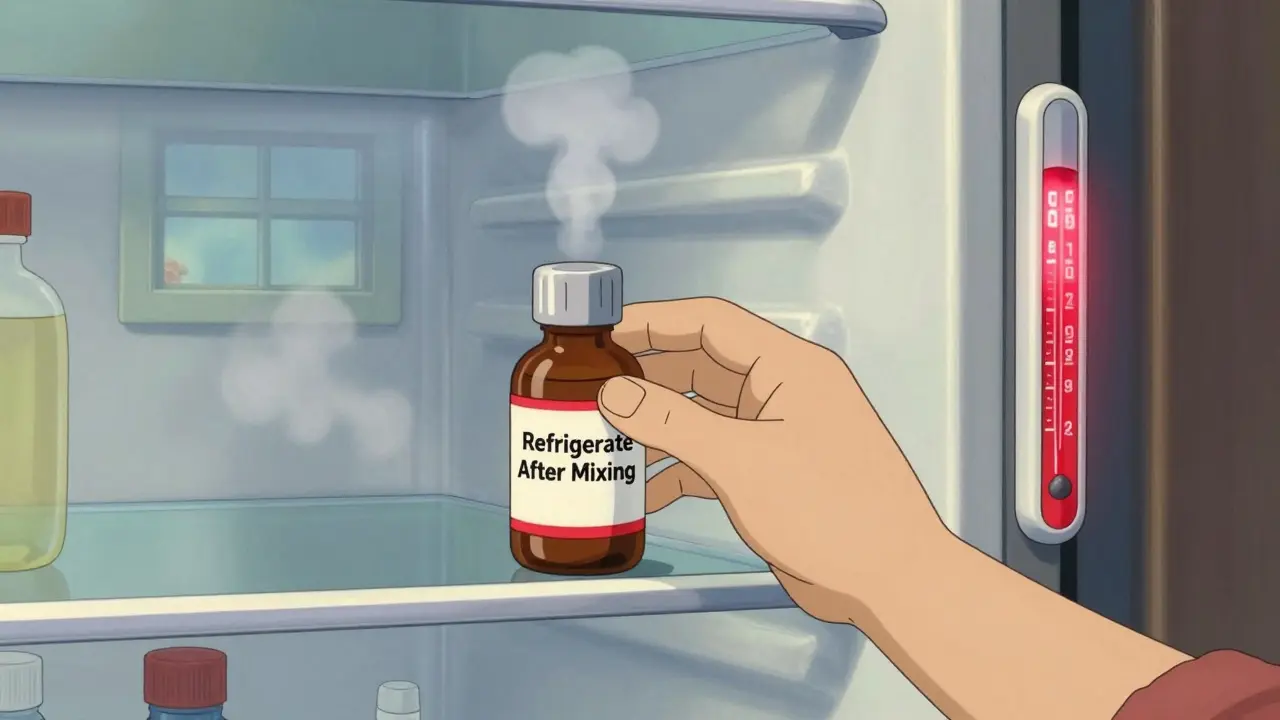
Don’t assume all bottles are the same. A liquid antibiotic might say "Refrigerate after mixing," while the pills in the same box say "Store at room temperature." Always read each label separately.
What the Words Actually Mean
"Room temperature" sounds simple, but it’s not just "anywhere in your house." According to the United States Pharmacopeia, that means 20°C to 25°C (68°F to 77°F). In Brisbane, that’s the difference between your bedroom closet and your bathroom. A bathroom? Bad idea. Steam from showers can soak the bottle and break down the medicine.
"Refrigerate" means keep it in the main part of your fridge-not the door. The door opens and closes constantly, causing temperature swings. A pill that needs to stay cold can lose its strength if it’s exposed to heat even once. Insulin, for example, starts breaking down above 30°C. If it’s been sitting in a hot car for an hour, it’s probably useless.
"Protect from light" means keep it in its original bottle. Clear plastic or glass bottles let in sunlight, which can degrade some medicines like nitroglycerin or certain antibiotics. If the label says this, don’t transfer the pills to a pill organizer unless it’s dark and sealed.
"Store in a dry place" is code for "avoid humidity." That’s why a kitchen drawer near the sink or a bathroom cabinet is a no-go. Moisture turns pills into mush and makes liquids grow mold. Even if the bottle looks fine, the medicine inside might be ruined.
What Happens If You Ignore These Instructions
It’s not just about wasted money. Taking a degraded medicine can be dangerous. Liquid antibiotics like amoxicillin lose potency fast if not refrigerated. A study from Nationwide Children’s Hospital found that kids on unrefrigerated liquid antibiotics were 40% more likely to have lingering infections because the dose was too weak.
Acetaminophen (the active ingredient in Tylenol) can break down into toxic compounds if stored too hot or too long. The FDA has documented cases where people took old, improperly stored painkillers and ended up with liver damage. Nitroglycerin tablets-used for heart attacks-can turn into useless powder if exposed to moisture. In an emergency, that could cost someone their life.
Even if the medicine looks fine, it might not work. A 2022 survey of 15,000 people showed that those who followed storage instructions had an 18.7% higher chance of taking their meds correctly and seeing results. That’s not a small boost-it’s the difference between feeling better and staying sick.
Common Mistakes People Make
Let’s be honest. Most of us store meds in the worst possible places.
- The bathroom cabinet: Steam, humidity, and temperature swings from hot showers make this the #1 worst spot. A 2023 survey by Express Scripts found 42% of users keep meds here.
- The car glovebox or trunk: On a 30°C day, a car’s interior can hit 70°C in 30 minutes. That’s hotter than an oven. Pills melt. Liquids separate. Insulin? Gone.
- Leaving meds out on the counter: Sunlight through a window can destroy light-sensitive drugs. Even a few hours of direct sun can do damage.
- Storing in a drawer with spices: Spices release moisture. Medicines absorb it. Don’t turn your medicine cabinet into a spice rack.
And here’s a sneaky one: once you open a bottle of liquid medicine, the clock starts ticking. Many antibiotics expire in 10-14 days after mixing-even if the bottle says "use by 2027." The label will say "Discard after 14 days when refrigerated." Write the discard date right on the bottle with a marker.
How to Store Medications Right
Here’s what works in real life:
- Use a cool, dry drawer or cupboard: A bedroom closet, a kitchen cabinet away from the stove, or a shelf in the laundry room are all better than the bathroom.
- Buy a small medicine box with a humidity indicator: They’re cheap, about $15-$20 online. Some even have temperature strips that change color if the meds got too hot or cold.
- Keep the original bottle: It’s designed to block light and seal out moisture. Don’t dump pills into a plastic bag.
- If refrigerating, use the main shelf: Not the door. Put it at the back where it’s coldest and most stable.
- For travel: Use a small insulated cooler with a cold pack if you’re going somewhere hot. Never check a bag with meds in it on a flight-carry it with you.
Parents of kids on multiple meds? Create a storage zone. Keep refrigerated ones together, room-temp ones together. Label them. Use small containers with lids. It saves time and prevents mistakes.
When in Doubt, Ask Your Pharmacist
Pharmacists aren’t just people who hand out pills. They’re trained to know exactly how each medicine behaves. If the label says "store below 25°C" and your house hits 30°C in summer, ask: "Is there a more stable version?" Some medicines come in different formulations-like a tablet instead of a liquid-that don’t need refrigeration.
Pharmacies in Australia now offer free storage advice. Just walk in and say, "I’m not sure how to store this." They’ll check the label, tell you what to do, and even give you a printed reminder. Some even offer temperature-monitoring stickers you can stick on your medicine box.
And if you’re on Medicare or a pension, ask about alternative packaging. Some seniors get their meds in blister packs with built-in humidity control-no fridge needed.
What’s Changing Soon
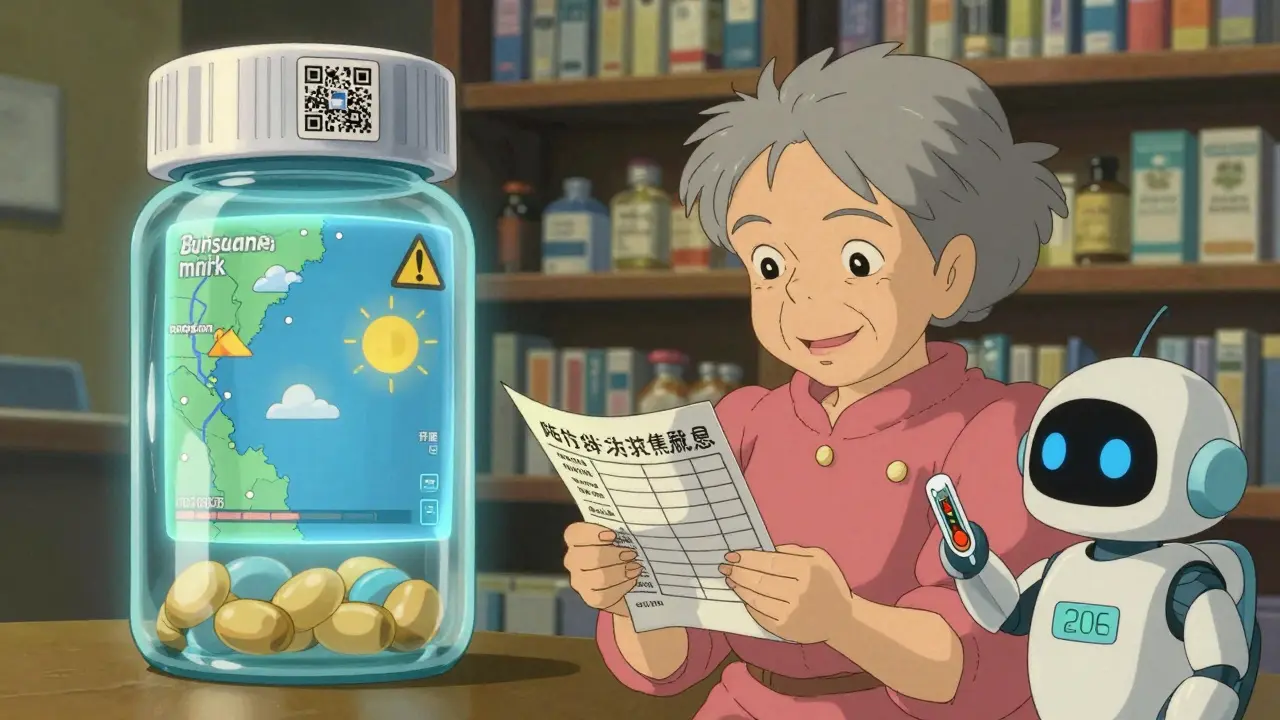
The future of medicine storage is already here. Starting in late 2024, major pharmacies like CVS and Walgreens are testing QR codes on labels. Scan it with your phone, and it shows you real-time storage advice based on your location and current weather. In Brisbane, it’ll warn you: "High humidity today. Keep meds sealed." In the next five years, smart packaging with tiny sensors will become common. Imagine a pill bottle that glows red if it got too hot. The FDA says this will cut storage-related errors by over 60%. It’s not sci-fi-it’s coming fast.
For now, the best tool you have is your eyes. Read the label. Understand the words. Don’t guess. Your medicine’s effectiveness-and your safety-depend on it.
What does "store at room temperature" really mean?
"Room temperature" means between 20°C and 25°C (68°F to 77°F). That’s not your bathroom or kitchen counter. It’s a cool, dry cupboard away from windows, stoves, or sinks. In Brisbane’s heat, that might mean keeping meds in a bedroom closet instead of the living room.
Can I store medicine in the fridge?
Only if the label says so. Many liquid antibiotics, insulin, and some eye drops require refrigeration. But don’t put everything in there. Pills that don’t need cold can absorb moisture and spoil. Always check the label. If it says "refrigerate," keep it on the main shelf-not the door.
What if my medicine looks different-discolored or cloudy?
If it looks, smells, or tastes off, don’t take it. Discoloration, clumping, or cloudiness means the medicine has degraded. This is especially common with liquids left out of the fridge or exposed to heat. Throw it out and get a new one. Your pharmacist can tell you if it’s safe to use.
Why can’t I keep medicine in the bathroom?
Bathrooms are humid, hot, and full of steam. That moisture gets into pill bottles and breaks down the active ingredients. Studies show that humidity can reduce the potency of some medications by up to 30% in just a few months. Plus, temperature swings from hot showers make it worse. It’s the worst place to store meds.
How long can I keep medicine after opening it?
It depends. Some pills last years. But liquids, eye drops, and insulin often expire within days or weeks after opening. The label will say: "Discard after 14 days." If it doesn’t, ask your pharmacist. Never guess. Using expired medicine can be ineffective or dangerous.


1 Comments
Jacob Hessler-22 March 2026
Stop being lazy and read the damn label. My grandma does it, and she’s 82. You think your bathroom is fine? Nah. Steam turns pills into mush. Simple. Do it right or don’t take it at all.