
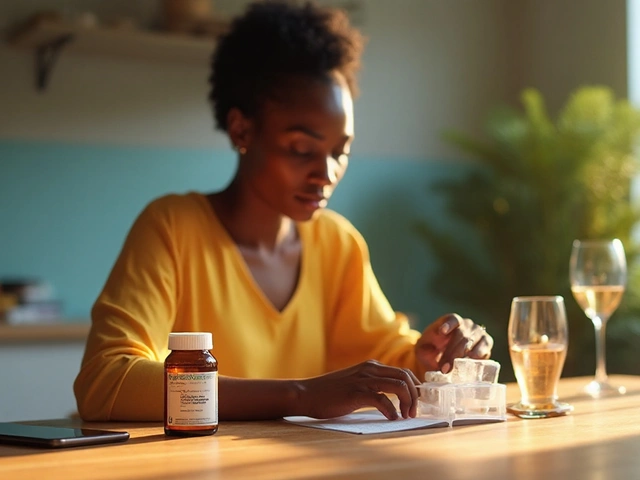
For decades, women have been told to use backup birth control when taking antibiotics. You’ve probably heard it from a pharmacist, a friend, or even a doctor: "Just to be safe, use condoms while you’re on antibiotics." But here’s the truth-most antibiotics don’t affect birth control pills. The fear isn’t based on science. It’s based on a myth that won’t die.
The Real Culprit: Only a Few Antibiotics Matter
The idea that all antibiotics mess with birth control started in the 1970s with a handful of unverified case reports. Back then, researchers didn’t have the tools to test hormone levels accurately. So when a woman got pregnant while on antibiotics, it was assumed the pill failed. But modern studies have shown something very different. There are only three drugs that definitively reduce the effectiveness of hormonal birth control: rifampin, rifabutin, and griseofulvin. Rifampin and rifabutin are antibiotics used to treat tuberculosis and some other serious infections. Griseofulvin is an antifungal, not an antibiotic, but it’s often grouped with them because it’s prescribed for skin and nail infections. These three drugs work by turning on liver enzymes that break down hormones faster. Specifically, they boost the activity of cytochrome P450 enzymes by up to 300%. That means your body processes ethinyl estradiol and progestin-two key hormones in birth control pills-so quickly that they never reach the levels needed to prevent ovulation. Studies show rifampin can drop estrogen levels by 25-50% and progestin by 14-37%. That’s enough to put you at risk.What About Amoxicillin, Azithromycin, or Doxycycline?
If you’re taking amoxicillin for a sinus infection, azithromycin for strep throat, or doxycycline for acne or a urinary tract infection-you’re fine. No backup needed. A 2011 systematic review of 14 studies found zero evidence that penicillin-based antibiotics like amoxicillin lower hormone levels. A 2020 CDC analysis of 35 clinical trials confirmed that non-rifamycin antibiotics don’t reduce hormone concentrations to sub-therapeutic levels (below 50 pg/mL for estrogen). Even metronidazole, which people often worry about for vaginal infections, has been shown in multiple studies to have no effect. The myth likely stuck because these drugs are common. Amoxicillin is one of the most prescribed antibiotics in the world. If you’re on birth control and take it for a sore throat, and then get pregnant later, it’s easy to blame the antibiotic. But pregnancy at that time is far more likely due to missed pills, vomiting, or starting a new pack late.What About Other Medications?
Antibiotics aren’t the only drugs that can interfere. If you’re on seizure meds like lamotrigine (at doses over 300 mg/day) or topiramate (over 200 mg/day), your birth control may not work as well. Same goes for some HIV medications-efavirenz and nevirapine can reduce hormone levels. And then there’s St. John’s wort. This herbal supplement, often used for mild depression, can cut estrogen levels by up to 57%. That’s more than rifampin. If you’re taking it, you need to talk to your doctor. Don’t assume natural means safe.
Why Do Pharmacists Still Tell You to Use Backup?
You’re not imagining it. Many pharmacists still recommend condoms when you pick up an antibiotic. A 2022 study in the Journal of the American Pharmacists Association found that 35% of pharmacists still advise backup contraception for all antibiotics-even ones like amoxicillin. Why? Two reasons. First, some pharmacists are following outdated guidelines from before 2016. Second, they’re being cautious. The fear of a lawsuit or a patient getting pregnant outweighs the risk of giving unnecessary advice. But that doesn’t make it right. The CDC, ACOG, and the FDA all agree: only rifampin, rifabutin, and griseofulvin require backup. Everything else? You’re safe.What Should You Do If You’re on Rifampin?
If you’re prescribed rifampin or rifabutin-for tuberculosis, meningitis, or another serious infection-you need to use backup contraception for 28 days after your last dose. That’s the CDC’s official recommendation. Use condoms, a diaphragm, or another non-hormonal method. Don’t confuse rifampin with rifaximin (Xifaxan). Rifaximin is used for traveler’s diarrhea and IBS. It doesn’t get absorbed into your bloodstream. It stays in your gut. That means it doesn’t interact with birth control. Same goes for other gut-targeted antibiotics like neomycin.Real Stories, Real Confusion
A 2022 Planned Parenthood survey of 1,500 women found that 62% believed antibiotics reduced birth control effectiveness. Nearly half said they’d used backup contraception during antibiotic treatment-even when it wasn’t necessary. On Reddit, threads about antibiotics and birth control get hundreds of comments. One woman wrote: "I took amoxicillin for a tooth infection and used condoms for two weeks. My pharmacist insisted. I felt stupid, but I didn’t want to risk it." Another said: "I got pregnant while on rifampin for TB. I was on the pill. I didn’t know it could interfere. Now I’m a mom, but I wish I’d known sooner." These aren’t just anecdotes. They’re evidence of a system that’s failed to communicate clearly.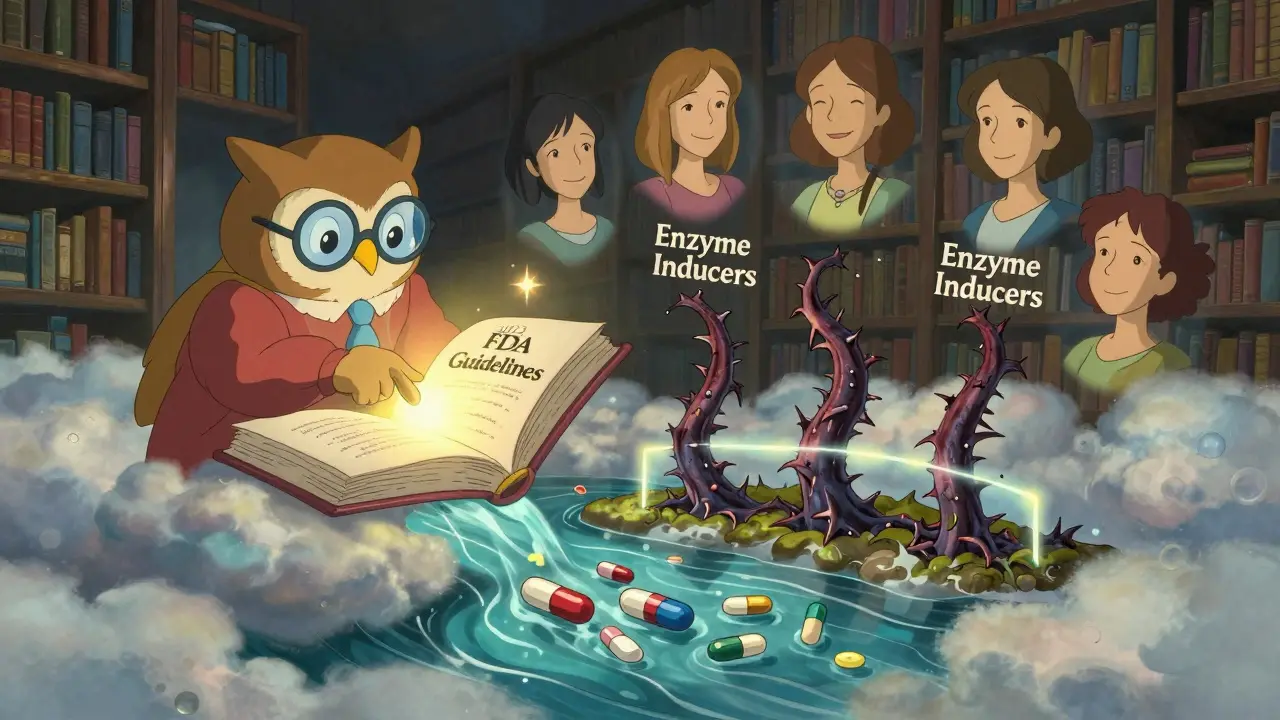
What’s Changed in 2025?
In January 2023, the FDA updated the labeling for all hormonal contraceptives. The new labels now clearly state: "Rifampin, rifabutin, and griseofulvin may reduce effectiveness. Other antibiotics do not affect effectiveness." That’s huge. For the first time, the warning is specific. No more vague "antibiotics may interfere" language. The message is now accurate, clear, and hard to misinterpret. Still, many providers haven’t caught up. A 2023 survey of 500 board-certified OB/GYNs found 98% agreed only rifamycins require backup. But in clinics, outdated advice still spreads.What’s the Bottom Line?
You don’t need to panic every time you get an antibiotic. Most of them? Safe. No backup needed. Only worry if you’re prescribed:- Rifampin (Rifadin)
- Rifabutin (Mycobutin)
- Griseofulvin (for fungal infections)
What If You’re Still Worried?
If you’re anxious-even if the science says you’re safe-it’s okay to use backup. Condoms protect against STIs too. But don’t do it because you think the pill won’t work. Do it because you want peace of mind. The goal isn’t to scare you. It’s to stop the unnecessary fear. Birth control works. Most antibiotics don’t break it. And knowing the difference? That’s power.Do all antibiotics reduce the effectiveness of birth control pills?
No. Only three drugs have proven effects: rifampin, rifabutin, and griseofulvin. Common antibiotics like amoxicillin, azithromycin, doxycycline, and metronidazole do not interfere with birth control pills. The myth that all antibiotics affect the pill comes from outdated information and misinterpreted case reports.
What should I do if I’m prescribed rifampin while on birth control?
Use a backup method of contraception-like condoms or a diaphragm-for 28 days after your last dose of rifampin. This applies to all forms of combined hormonal contraception, including the pill, patch, and vaginal ring. Rifampin reduces hormone levels enough to risk ovulation, so backup is required by the CDC and FDA guidelines.
Is it safe to take amoxicillin with birth control?
Yes. Amoxicillin does not reduce the effectiveness of birth control pills. Multiple studies, including a 2011 review in Contraception and a 2020 CDC analysis of 35 trials, confirm that penicillin antibiotics do not affect hormone levels. You can take amoxicillin without changing your birth control routine.
Can I trust what my pharmacist says about antibiotics and birth control?
Some pharmacists still give outdated advice out of caution. A 2022 study found 35% of pharmacists recommend backup contraception for all antibiotics, even though only three drugs require it. Ask your pharmacist: "Is this an enzyme-inducing antibiotic?" If they can’t name rifampin, rifabutin, or griseofulvin, ask your doctor for clarification.
What about St. John’s wort or other supplements?
St. John’s wort is a major concern. It can reduce estrogen levels by up to 57%, making birth control less effective. Other herbal supplements and some seizure medications (like lamotrigine and topiramate) also interfere. Always tell your doctor about everything you’re taking-prescription, over-the-counter, or herbal.
What’s the difference between rifampin and rifaximin?
Rifampin is absorbed into your bloodstream and affects liver enzymes, which lowers hormone levels. Rifaximin (Xifaxan) is not absorbed-it stays in your gut to treat diarrhea or IBS. It doesn’t interact with birth control. Don’t assume similar names mean similar effects. Always check the exact drug name.
Why does this myth still exist if it’s been debunked?
The myth started with early case reports in the 1970s that weren’t scientifically sound. Since then, it’s been repeated in clinics, pharmacies, and even textbooks. People remember the warning but forget the update. Plus, it’s easier to say "use backup" than to explain enzyme induction. But the science is clear: only three drugs matter.
Should I use backup if I vomit after taking my pill while on antibiotics?
Yes-but not because of the antibiotic. If you vomit within two hours of taking your pill, it may not have been absorbed. That’s true whether you’re on antibiotics or not. Follow your pill’s instructions: take another pill if you vomit, or use backup for seven days. The antibiotic has nothing to do with it.


15 Comments
Kelly Gerrard-30 December 2025
Let me just say this once and for all: if your pharmacist is still telling you to use condoms with amoxicillin, they’re operating on 1998 software. The FDA updated guidelines in 2023. Stop letting outdated fear dictate your choices. You’re not being reckless-you’re being informed.
Nadia Spira-31 December 2025
Wow. Another ‘science says’ post that ignores the real issue: systemic medical negligence. The fact that 35% of pharmacists still give wrong advice isn’t an accident-it’s institutional inertia wrapped in liability fear. And now we’re supposed to trust the system more? Please. The myth persists because the system refuses to audit itself.
Glendon Cone- 1 January 2026
Bro. I took doxycycline for acne last year and didn’t use condoms. No pregnancy. No drama. Just me, my pill, and a very chill liver. 🙌
Also, St. John’s wort? Yeah, that’s the real villain. I used to take it for ‘anxiety’-turns out it was just making my birth control useless. Learned the hard way. Don’t be like me.
Aayush Khandelwal- 3 January 2026
Enzyme induction isn’t just a pharmacokinetic buzzword-it’s a paradigm shift in how we conceptualize drug interactions. Rifampin’s CYP3A4 upregulation creates a metabolic tsunami that overwhelms contraceptive hormone thresholds. Meanwhile, amoxicillin? A passive bystander. The myth endures because laypersons conflate pharmacological mechanism with clinical outcome. We need better science communication, not just better guidelines.
Henry Ward- 3 January 2026
So you’re telling me I wasted two weeks using condoms because some idiot pharmacist didn’t update their training? And now I’m supposed to feel smart for believing a blog post over my doctor? This is why people hate healthcare. You don’t get to call it ‘empowerment’ when the system got it wrong for 50 years and now expects you to thank it for a correction.
henry mateo- 4 January 2026
i read this whole thing and i still dont trust it. i got preggers once after amoxicillin. maybe it wasnt the antibiotic but still. better safe than sorry right? plus condoms are good for stis. why risk it? my 2 cents. (sorry for typos)
Colin L- 5 January 2026
Let’s not pretend this is just about science. This is about power. Who gets to decide what’s ‘safe’? Pharmacists? The FDA? Some guy in a lab coat with a grant? Women have been told to use backup for decades because the system didn’t trust them to manage their own bodies. Now we’re told ‘you’re fine’-but only after being conditioned to fear. The real issue isn’t rifampin-it’s the fact that we’ve been gaslit by medicine for generations. And now you want us to just… believe you? After all that?
Hayley Ash- 6 January 2026
Oh wow so now we’re supposed to believe the FDA because they printed it on a label? What’s next? Trusting TikTok for medical advice? At least the old myth made people use condoms. Now you’re just encouraging people to skip protection and then cry when they get pregnant because they ‘trusted the science’
kelly tracy- 7 January 2026
You say ‘most antibiotics are safe’ but what about the one in a million case where it isn’t? You think your body is a lab experiment? You think you’re the only one who’s ever had a weird metabolism? This isn’t empowerment-it’s negligence dressed up as facts. I’m not taking the risk. And if you are, good luck when your ‘science’ fails you.
srishti Jain- 8 January 2026
amoxicillin = safe. rifampin = bad. st johns wort = worse. condoms = still good. done.
Kunal Karakoti- 9 January 2026
It’s fascinating how deeply embedded myths become part of our bodily rituals. We don’t just take pills-we perform safety. The condom ritual isn’t about efficacy; it’s about symbolic control in a world where our bodies are constantly policed. Even when science absolves us, we cling to the ritual because it feels like agency. Maybe the real breakthrough isn’t correcting the myth, but accepting why we needed it in the first place.
Shae Chapman-11 January 2026
Thank you for writing this. I’ve been terrified for years because my pharmacist said ‘just in case.’ I finally asked my OB and she laughed and said ‘you’re fine.’ I cried. I felt so stupid. But now I feel like I can breathe again. 💕
Also-St. John’s wort? I stopped it cold turkey after this. Never knew it was that dangerous. Thank you for the clarity.
Cheyenne Sims-11 January 2026
The FDA’s 2023 labeling update is a landmark in evidence-based medicine. It corrects decades of misinformation propagated by an undertrained healthcare workforce. The fact that pharmacists still misinform patients is not a failure of science-it is a failure of professional accountability. This is not a matter of opinion. It is a matter of regulatory compliance. Those who continue to disseminate outdated guidance should be subject to disciplinary review.
Joseph Corry-12 January 2026
Let’s be honest: this entire post is just another example of neoliberal medical paternalism disguised as enlightenment. You reduce complex physiological interactions to bullet points and call it ‘empowerment.’ But empowerment without structural reform is just performative. The real problem isn’t the myth-it’s that women are still expected to self-educate on drug interactions while the system remains opaque, underfunded, and dismissive. You give us facts but no access to care. That’s not liberation. That’s a trap.
Glendon Cone-12 January 2026
^^^ I get what you’re saying, but I’m just trying to survive. I don’t have time to fight the system. I just want to know if I can take amoxicillin without panic. So thank you for the simple answer. 🙏
Also, I’m now telling my sister. And her pharmacist. And her friend who’s on birth control. One person at a time.