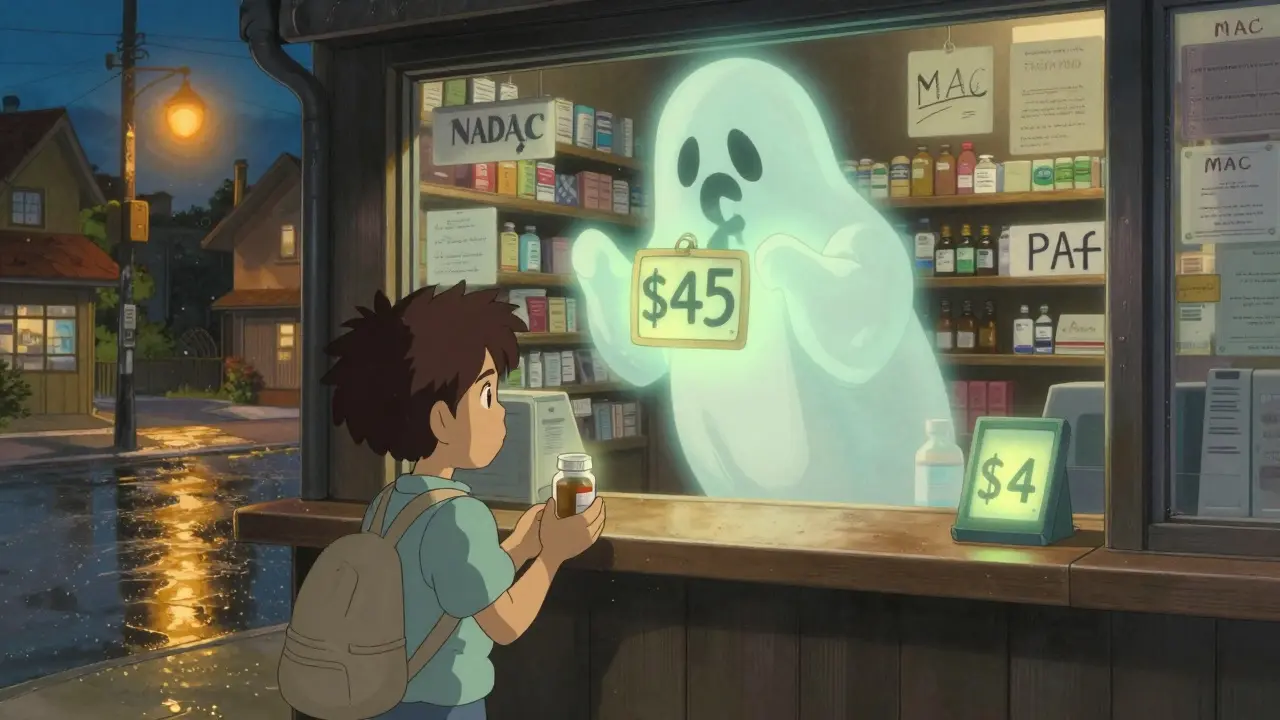
Have you ever picked up a generic prescription and been shocked by the price? You might’ve paid $45 for a month’s supply of a drug that costs $4 if you pay cash. It’s not a mistake. It’s how the system is built. Behind the scenes, insurers, pharmacies, and middlemen called Pharmacy Benefit Managers (PBMs) are locked in a complex, opaque negotiation that determines what you pay at the pharmacy counter. And for generic drugs - the backbone of prescription spending - this system often works against the patient.
Who Really Sets the Price?
It’s not your doctor. It’s not your pharmacist. And it’s not even your insurer directly. The real power lies with Pharmacy Benefit Managers (PBMs) - third-party companies that act as intermediaries between drug manufacturers, pharmacies, and health plans. Think of them as the hidden negotiators. They don’t sell drugs. They don’t dispense them. But they decide which generics are covered, at what price, and how much pharmacies get paid to fill them.
Three companies - OptumRx, CVS Caremark, and Express Scripts - control about 80% of the U.S. PBM market. That kind of consolidation means they have enormous leverage. When they negotiate with drugmakers, they demand huge discounts in exchange for putting a drug on their formulary - the list of medications an insurer covers. But here’s the twist: those discounts don’t always go to you.
The Two-Part Pricing Game
Generic drug pricing has two layers: what the pharmacy pays to get the drug, and what the PBM charges your insurer. The difference? That’s where the money is made.
Pharmacies buy generics from wholesalers at the National Average Drug Acquisition Cost (NADAC). This is the real market price - the average cost pharmacies pay nationwide. For a common generic like metformin, that might be $1.20 per pill. But the PBM doesn’t reimburse the pharmacy based on NADAC. Instead, they use a formula: Maximum Allowable Cost (MAC) - a list price set by the PBM, often higher than what the pharmacy actually paid.
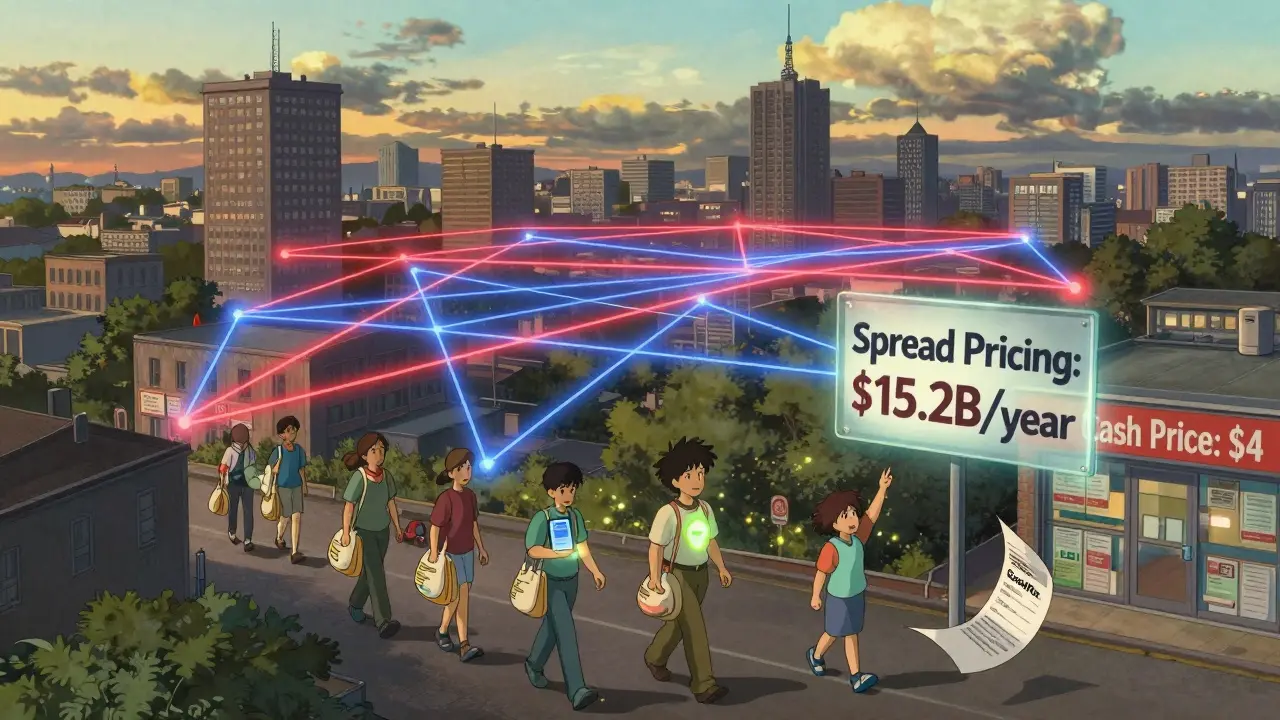
Then comes the kicker: Spread pricing. The PBM charges your insurer $15 for that same $1.20 pill. But they only pay the pharmacy $8. The $7 difference? That’s profit - hidden from you, your doctor, and often your insurer. This isn’t rare. Evaluate Pharma estimated in 2024 that spread pricing on generics alone generates $15.2 billion a year in undisclosed revenue for PBMs.
Why Your Copay Is Higher Than Cash
You’d think insurance saves you money. But for generics, it often doesn’t. Here’s why:
- Many PBMs set your copay based on the MAC - the inflated price they use to calculate reimbursement - not the real cost of the drug.
- Some plans have fixed copays ($5, $10, $15) that don’t change even if the drug’s real cost drops.
- If the PBM reimburses the pharmacy $8 but your copay is $12, you’re paying more than the pharmacy got paid.
A 2024 Consumer Reports survey found 42% of insured adults had paid more out-of-pocket for a generic than the cash price. One Reddit user wrote: “I paid $45 for a 30-day supply of lisinopril. Walked into a different pharmacy and paid $4 cash.” That’s not an outlier. It’s standard.
The Gag Rule That Keeps You in the Dark
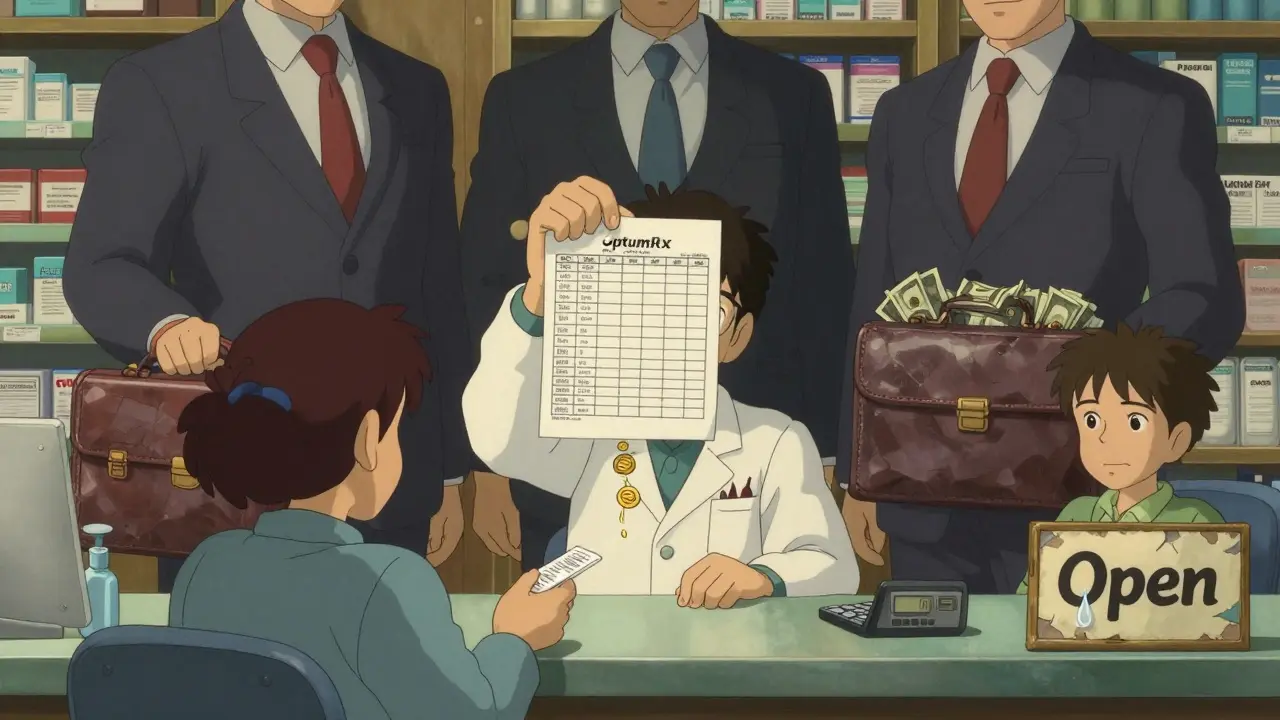
Even when a pharmacist knows you’d save money by paying cash, they’re often legally barred from telling you. Over 90% of PBM contracts include gag clauses - contractual terms that prevent pharmacists from disclosing lower cash prices. These clauses were so widespread that Congress banned them in 2020 under the No Surprises Act. But enforcement is patchy. Many pharmacists still fear retaliation if they speak up.
The result? Patients are left guessing. You think you’re getting a “discount” because you have insurance. But you’re actually paying more than someone who walks in without insurance.
What Happens to Pharmacies?
The pressure isn’t just on patients - it’s crushing pharmacies, especially independent ones.
- Pharmacies must run two pricing systems: one for insurance claims, one for cash-paying customers.
- They spend hundreds of hours a year trying to decode PBM reimbursement rules.
- Clawbacks - where PBMs retroactively reduce payments after a claim is paid - hit 63% of independent pharmacies.
- Between 2018 and 2023, over 11,300 independent pharmacies closed because reimbursement rates dropped below their cost to operate.
Some pharmacies now hire full-time PBM specialists just to manage contracts - at salaries of $85,000 to $120,000 a year. That’s not sustainable for small businesses.
Who Benefits? Who Gets Left Behind?
Let’s break it down:
| Stakeholder | Benefit | Cost |
|---|---|---|
| PBMs | $15.2B/year in spread pricing profits | None - opaque contracts shield them from scrutiny |
| Drug Manufacturers | Big rebates for being on formularies | Must inflate list prices to fund rebates |
| Insurers | Lower premiums because PBMs absorb costs | Pay higher overall costs due to hidden fees |
| Patients | Potential access to formulary drugs | Pay more than cash price; face surprise bills |
| Independent Pharmacies | Volume from PBM networks | Reimbursement below cost; clawbacks; closure risk |
The system looks like it’s saving money - but it’s just moving money around. Drugmakers raise list prices to fund rebates. PBMs take a cut. Insurers keep premiums low. And patients? They pay the difference - often unknowingly.
What’s Changing? What’s Coming?
Pressure is building. In September 2024, the Biden administration issued an executive order banning spread pricing in federal programs like Medicare and Medicaid - with full enforcement starting January 2026. That’s a big deal. If PBMs can’t profit from the spread on federal plans, they’ll have to change how they price across the board.
Forty-two states are now passing laws requiring PBM transparency. Some require disclosure of MAC lists. Others ban gag clauses outright. The Pharmacy Benefit Manager Transparency Act of 2025 (S.1278) would force PBMs to pass 100% of rebates to insurers - meaning savings would actually reach patients.
Meanwhile, the Medicare Drug Price Negotiation Program is expanding. It’s not just for brand-name drugs anymore. If Medicare starts negotiating prices for generics, private insurers will likely follow. That could bring real price drops - not just hidden rebates.
What Should You Do?
You can’t fix the system alone. But you can protect yourself:
- Always ask the pharmacist: “What’s the cash price?” They can’t legally stop you from asking.
- Use apps like GoodRx, Cost Plus Drug Company, or SingleCare to compare prices across pharmacies.
- If your copay is higher than the cash price, ask your insurer to reconsider your formulary tier.
- Switch to a plan with transparent pricing - even if the premium is slightly higher. You’ll save more in the long run.
Generic drugs are supposed to be affordable. They’re not. The system isn’t broken - it’s working exactly as designed. But you don’t have to accept it. Know your rights. Ask questions. Pay cash when it makes sense. Your wallet will thank you.
Why do I pay more for a generic drug with insurance than without?
Because your insurance plan uses a PBM that sets a Maximum Allowable Cost (MAC) higher than what pharmacies actually pay. Your copay is based on that inflated price, while the pharmacy gets reimbursed less. The difference - called spread pricing - goes to the PBM as profit. Meanwhile, if you pay cash, you’re paying the real market price (NADAC), which is often far lower.
Can my pharmacist tell me the cash price is cheaper?
Legally, yes - since the No Surprises Act of 2020 banned gag clauses. But many pharmacists still avoid mentioning it due to fear of retaliation from PBM contracts. Don’t assume they’ll tell you. Always ask.
Do PBMs really save money on drugs?
They claim to, but the evidence is mixed. While they negotiate discounts from manufacturers, those discounts often come in the form of rebates - which don’t lower your out-of-pocket cost. Instead, they’re used to lower premiums for insurers or fund PBM profits. Studies show patients often pay more under the PBM system than if they paid cash.
Why are generic drug prices so inconsistent between pharmacies?
Because each pharmacy has a different contract with different PBMs. One pharmacy might be in a network that reimburses $8 for a drug, while another gets $12. And if you’re insured, your copay is based on your plan’s MAC list - which varies by insurer. Cash prices depend on the pharmacy’s wholesale cost. That’s why the same drug can cost $4 at one store and $45 at another - even for the same person.
Is there a better way to set generic drug prices?
Yes. Several reforms are gaining traction: banning spread pricing, requiring PBMs to pass all rebates to insurers, using NADAC as the reimbursement baseline instead of inflated MAC lists, and eliminating gag clauses. The Medicare Drug Price Negotiation Program is a model - if extended to private insurance, it could bring real price transparency and savings.
Next Steps for Patients
If you take generics regularly, treat your prescription like a shopping list. Don’t assume insurance always saves money. Check GoodRx before you fill. Ask your pharmacist for the cash price. If it’s lower, pay cash - and ask your insurer why they’re not covering the lower price. You might be surprised how much you can save - and how broken the system really is.


Write a comment