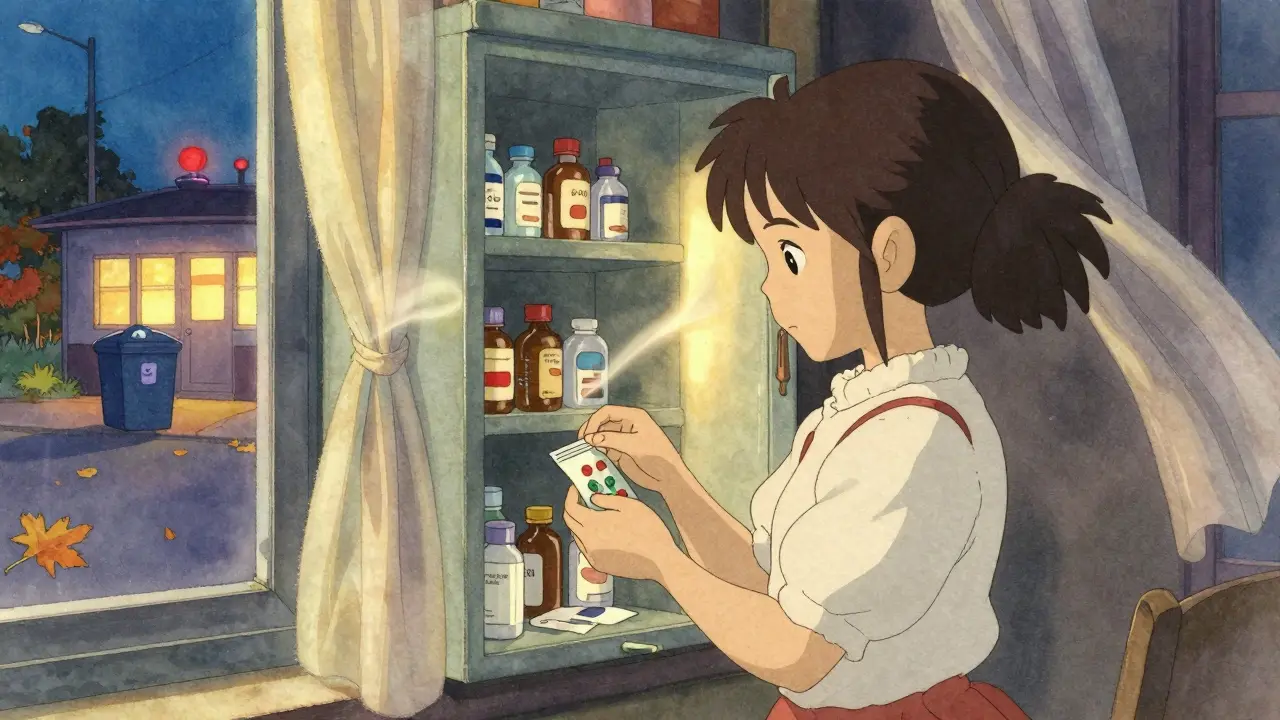
Every year, millions of unused or expired prescription drugs sit in bathroom cabinets, kitchen drawers, and medicine chests across the U.S. Some are old painkillers, others are leftover antibiotics or sleeping pills. They’re not being used anymore-but they’re still dangerous. That’s why the prescription drug take-back program exists. It’s not a one-time event. It’s a lifeline.
What Happens on National Prescription Drug Take-Back Day?
The National Prescription Drug Take-Back Day happens twice a year-once in April and once in October. On the last Saturday of those months, from 10 a.m. to 2 p.m. local time, you can walk into a police station, hospital pharmacy, or community center and drop off any unwanted prescription medications. No questions asked. No ID needed. No judgment. The DEA runs this program with help from nearly 4,500 local law enforcement agencies. In April 2025 alone, Americans dropped off 620,321 pounds of pills, patches, and capsules. That’s over 310 tons of potentially dangerous drugs removed from homes in a single day. Since 2010, the program has collected nearly 10 million pounds total. You’re not just cleaning out your medicine cabinet. You’re preventing overdoses. You’re stopping kids from grabbing pills out of curiosity. You’re keeping chemicals out of water supplies. And you’re doing it safely.What Can You Drop Off?
Not everything goes in the bin. The rules are simple but specific:- ✅ Tablets and capsules
- ✅ Prescription patches (like fentanyl or nicotine)
- ✅ Liquid medications in sealed original containers (no open bottles)
- ✅ Creams and ointments in tubes or jars
- ❌ Syringes or needles (sharps)
- ❌ Illicit drugs (like heroin or cocaine)
- ❌ Inhalers or aerosols
- ❌ Thermometers or medical devices
Where Do You Go?
There are thousands of drop-off locations. You can find one near you by visiting takebackday.dea.gov or using the free “Dispose My Meds” app. Sites include:- Local police departments
- Pharmacies like CVS and Walgreens (some have permanent kiosks too)
- Hospital clinics
- Fire stations
- Community centers
Why This Matters
Here’s the hard truth: 8 million Americans misused prescription painkillers in 2024. Most got them from family members’ medicine cabinets. The FDA says 57% of people who misuse opioids get them from friends or relatives. That’s not random drug dealers. That’s your uncle’s leftover Vicodin. When you flush pills or toss them in the trash, they don’t disappear. They seep into groundwater. They end up in rivers. They get picked up by pets or kids. And they can kill. The Take-Back Day isn’t just about disposal. It’s about prevention. Since the program started, opioid overdose deaths have dropped 27%-not because of one thing, but because of many, including this. When people know they can safely get rid of old meds, they do. And fewer people end up with them.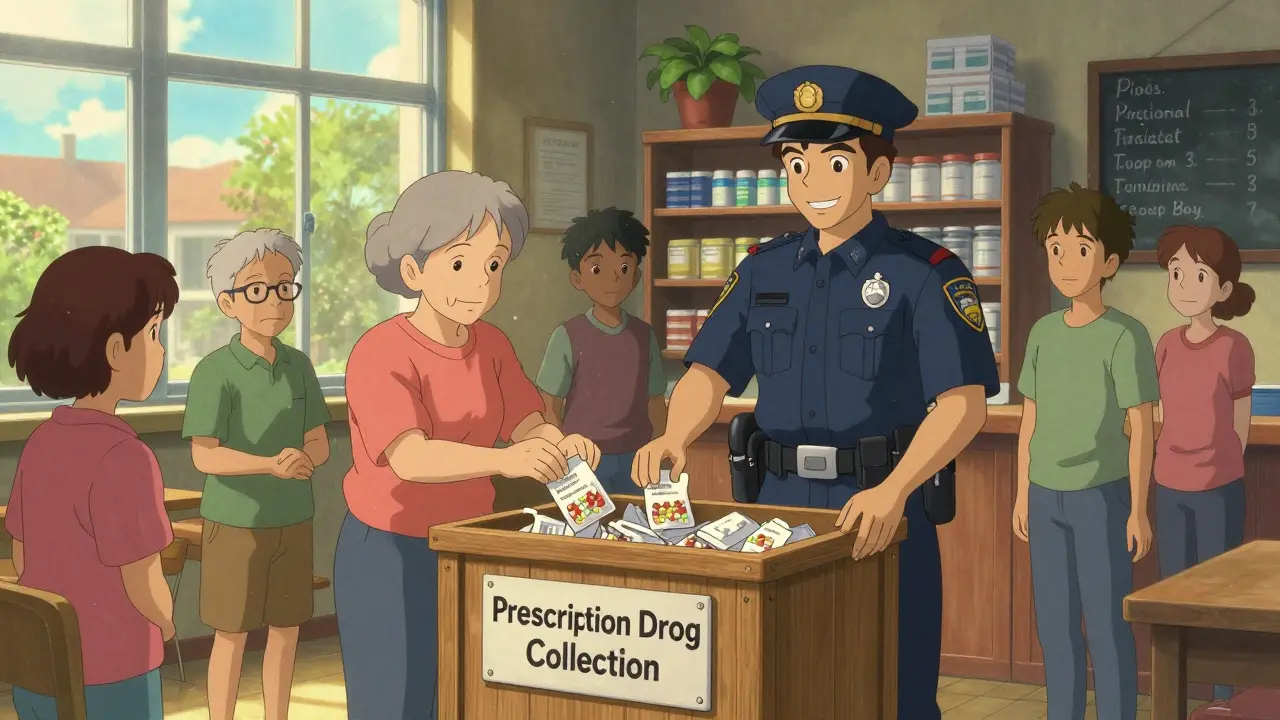
What to Expect When You Show Up
You pull up to a police station. There’s a table set up with a bin labeled “Prescription Drug Collection.” A uniformed officer stands nearby, smiling. You walk over. You hand them a small bag of pills. They put it in the bin. You say thank you. They say you’re welcome. You leave. That’s it. No forms. No signature. No tracking. No one asks if you’re addicted, if you’re lying, or if you’ve been taking too much. That’s the point. The program is anonymous because shame keeps people from doing the right thing. Most people spend less than two minutes there. Some bring a few bottles. Others bring entire drawers full. One woman in Ohio dropped off 14 different prescriptions-her husband’s, her daughter’s, and her own. She said, “I didn’t want to be the reason someone overdoses.”What Happens to the Drugs After You Drop Them Off?
The police don’t keep them. They don’t sell them. They don’t flush them. They lock them in secure containers and transport them to licensed incineration facilities. The DEA ensures all drugs are destroyed under federal environmental standards. No ash goes into landfills. No chemicals leak into the air. Everything is burned at temperatures high enough to break down every molecule. It’s not glamorous. But it’s necessary.What If You Miss the Day?
You don’t have to wait six months. There are over 14,000 permanent drug disposal kiosks across the country-mostly in pharmacies. Walgreens and CVS now have them in more than 1,200 locations. You can drop off pills any day, during store hours. No appointment. No wait. If your local pharmacy doesn’t have one, ask them to install one. It’s free for them to participate. The DEA provides the kiosks and disposal service.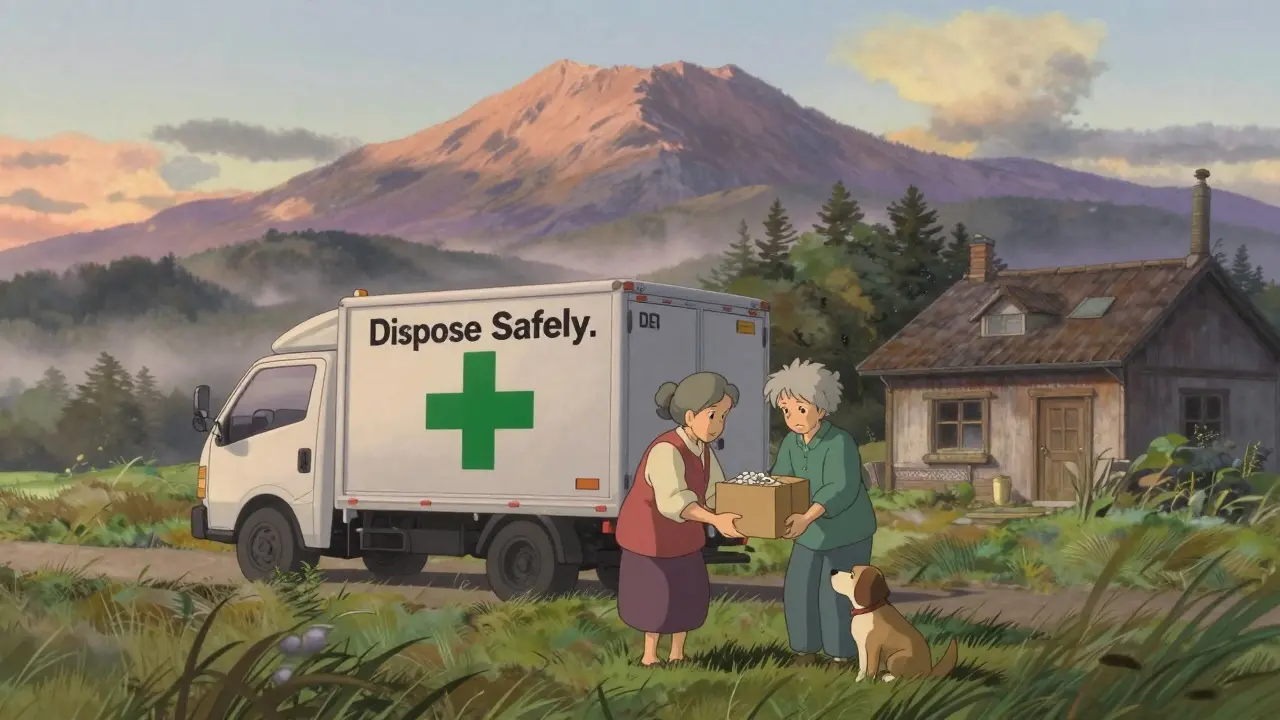
Why People Don’t Use It (And How to Change That)
Only 19% of Americans properly dispose of unused medications. Why?- 47% say they don’t know about the event
- 32% say the nearest site is too far
- 28% think flushing or trashing is fine

14 Comments
jeremy carroll-15 December 2025
just dropped off my dad's old oxy bottles at the police station last saturday. no big deal, but felt good. my mom cried a little. glad they don't make you prove you're not a junkie to do the right thing.
Natalie Koeber-15 December 2025
so let me get this straight... the government gives us these drugs in the first place, then acts like they're saints for collecting them? i've got a bridge in brooklyn to sell you. this is just damage control after decades of pharmaceutical fraud. they don't want you to know the real cost.
Rulich Pretorius-15 December 2025
The act of disposal is not merely logistical-it is ethical. When we leave pharmaceuticals in accessible spaces, we normalize their presence as commodities rather than controlled substances. This program, however imperfect, reorients the relationship between the individual and the pharmacological. It is not about compliance; it is about moral responsibility.
Dwayne hiers-17 December 2025
Per DEA guidelines, all collected pharmaceuticals undergo incineration at >1,800°F under 40 CFR Part 264, ensuring complete mineralization of active pharmaceutical ingredients. No bioaccumulation. No leachate. The carbon footprint per pound destroyed is 0.18 kg CO2e-far lower than landfill degradation of opioids in groundwater.
Jonny Moran-18 December 2025
I've lived in 7 states and every time I've seen this program in action, it’s been quiet, dignified, and human. No one’s judging. No one’s asking. Just people doing the right thing. That’s the kind of community I want to be part of.
Alexis Wright-19 December 2025
Let’s be real-this program is a PR stunt. You think the DEA cares about your grandma’s leftover Xanax? They care about reducing liability. If you’re not a dealer, you’re just collateral damage in their war on perception. And don’t even get me started on the kiosks-they’re just corporate tax write-offs disguised as public service.
Rich Robertson-19 December 2025
In my town, the pharmacy kiosk is by the front door. I’ve seen teenagers drop off their parents’ pain meds after a surgery. I’ve seen elderly folks bring in bottles from 2012. No one says a word. But you can see the relief in their eyes. That’s the quiet power of this thing. It doesn’t need a speech. It just needs to exist.
Wade Mercer-20 December 2025
I’m not saying you shouldn’t do this. But you’re not some hero for throwing away pills. You’re just doing what you’re told. Meanwhile, the real problem-overprescribing, insurance loopholes, pharma lobbying-goes untouched. This is moral convenience.
Daniel Thompson-22 December 2025
I noticed the kiosk at my local CVS only accepts solid pills. What about liquid medications? I have a full bottle of hydrocodone syrup from my knee surgery. Should I pour it down the drain? Or is that just as bad as flushing? I don’t want to be the guy who ruins the water supply.
Daniel Wevik-23 December 2025
This is one of the few things in public health that actually works without bureaucracy. No waiting. No paperwork. No judgment. Just a bin and a badge. And the stats speak for themselves-27% drop in opioid deaths since 2010 isn’t luck. It’s behavior change. We need more programs like this, not fewer.
Sinéad Griffin-25 December 2025
AMERICA IS STILL THE GREATEST COUNTRY ON EARTH BECAUSE OF PROGRAMS LIKE THIS 🇺🇸💪🔥 WE DON'T LET DRUGS RUN WILD HERE. WE TAKE THEM BACK. WE CLEAN THEM UP. WE PROTECT OUR KIDS. #AMERICANPRIDE #DRUGTAKEBACK
Sarthak Jain-25 December 2025
in india we just keep old meds in the drawer till they expire or someone dies. never thought about this. is it really safe to just hand them over? like... what if someone steals them from the bin? or sells them? i mean, no one checks the bags right?
Tim Bartik-27 December 2025
I dropped off a whole shoebox of pills last weekend. My neighbor saw me and yelled, 'Dude, you're a hero!' I said nah, I'm just not a dumbass. But then I got a text from my cousin who’s in rehab. She said, 'Thanks for doing this. I used to get my stuff from my uncle's cabinet.' I cried in my truck. This shit matters.
Edward Stevens-28 December 2025
So you’re telling me the government spent millions to build 14,000 kiosks... just so we can feel better about not throwing pills in the trash? And we’re supposed to be impressed? I’d rather they just stop prescribing so damn many opioids in the first place.