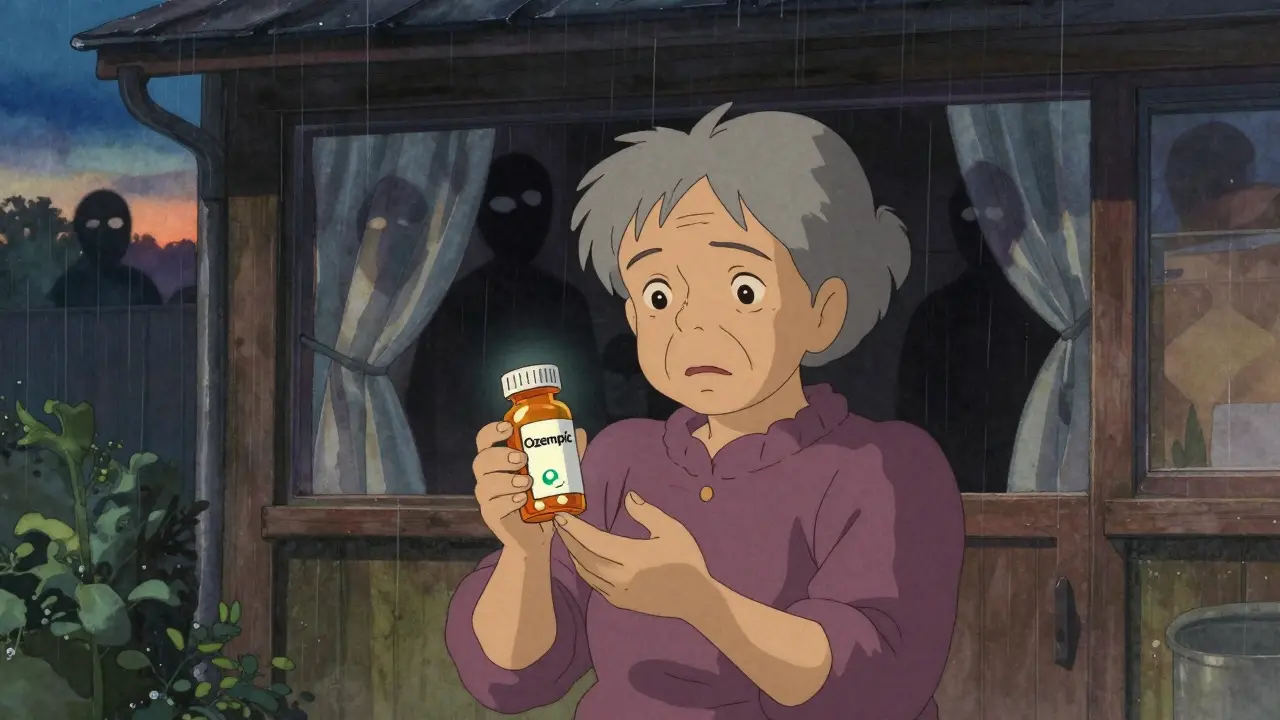
Every year, millions of people around the world buy medicines online because it’s convenient, cheap, or they’re embarrassed to ask their doctor for help. But what they don’t know is that online pharmacy counterfeits are killing people - and it’s happening right now.
Think you’re saving money by ordering Ozempic or Botox from a website that offers it for half the price? You’re not. You’re risking your life. In 2024, U.S. drug enforcement agencies seized over 60 million fake pills laced with fentanyl - a synthetic opioid 50 times stronger than heroin. Many of those pills were sold as painkillers or weight-loss drugs through websites that look just like real pharmacies. They have shopping carts, customer reviews, and even live chat support. But they’re run by criminals. And the drugs they sell? They could be filled with chalk, rat poison, or enough fentanyl to stop your heart.
How fake medicines are made and sold
Counterfeit drugs aren’t just poorly made. They’re engineered to trick you. Criminal networks copy the color, shape, and branding of real pills. They use real-looking packaging, fake certification seals, and even create websites with .com domains that mimic legitimate pharmacies. Some even hire graphic designers and copywriters to make their sites feel trustworthy.
These operations don’t need factories in hidden basements. They often source raw chemicals from unregulated labs in China, India, or Eastern Europe. Then they ship them in bulk to distribution hubs around the world. A single container might hold millions of fake pills - some labeled as Ozempic, others as Viagra, Xanax, or antibiotics. They’re then shipped directly to consumers via mail or courier, avoiding customs checks by splitting shipments into small packages.
According to the Pharmaceutical Security Institute, over 2,400 different medicines were targeted by counterfeiters in 2024. The most common? Weight-loss drugs, painkillers, diabetes treatments, and antibiotics. Why? Because they’re in high demand, expensive, and people are desperate to get them without a prescription.
Why you can’t trust online pharmacies
Legitimate online pharmacies follow strict rules. They require a valid prescription. They employ licensed pharmacists. They store drugs at the right temperature. They track every pill from manufacturer to your door. They report adverse effects to health authorities.
Illicit ones? None of that. The National Association of Boards of Pharmacy found that 95% of websites selling prescription drugs online operate illegally. That means if you’re buying without a prescription, you’re almost certainly buying from a criminal operation.
Even if a site looks professional - with SSL certificates, real-looking testimonials, and a “pharmacist on call” button - it doesn’t mean it’s safe. In 2025, Interpol’s Operation Pangea XVI shut down 13,000 websites, arrested 769 people, and seized over 50 million fake doses. Many of those sites had been operating for years. People trusted them. And many of those people ended up in emergency rooms.
The real danger: what’s inside the pill
Counterfeit medicines don’t just lack the right ingredients. They often contain deadly ones.
Take fake Ozempic. In 2023 and 2024, the FDA found multiple batches of counterfeit semaglutide sold online. Some had no active ingredient at all. Others contained unknown chemicals that caused severe nausea, vomiting, and liver damage. One patient reported blurred vision after injecting what she thought was Botox - it turned out to be a solution of industrial-grade saline and formaldehyde.
Fentanyl-laced pills are the most terrifying. These counterfeit pills are made to look like oxycodone or Xanax, but they contain enough fentanyl to kill an adult in seconds. The DEA says nearly 70% of all fake pills tested in 2024 contained a lethal dose. People take one thinking it’s a painkiller. They collapse. Sometimes they die before help arrives.
And it’s not just pills. Counterfeit eye drops, insulin pens, and even vaccines have been found online. In one case, a patient in Australia received fake Muro 128 eye drops for dry eyes. The solution contained bacteria. She lost vision in one eye.
Who’s buying these drugs - and why
It’s not just people in developing countries. People in the U.S., Canada, Australia, and the U.K. are buying fake medicines too. Why? Because they can’t afford the real thing. Or they’re ashamed to talk to their doctor about erectile dysfunction, weight gain, or mental health. Or they’re told by a friend that “this site is legit.”
One survey found that 37% of people who bought prescription drugs online didn’t have a prescription. Many didn’t even know it was illegal. They thought they were saving money. Instead, they were gambling with their health.
And the criminals know this. They target people who are vulnerable - seniors on fixed incomes, people without insurance, teens trying to lose weight, and those struggling with addiction. They use social media ads, Google search results, and even YouTube influencers to lure them in.
How to spot a fake online pharmacy
You don’t need to be a tech expert to stay safe. Here’s what to check before you click “Buy Now”:
- Do they require a prescription? If they don’t, walk away. Legitimate pharmacies never sell controlled substances without one.
- Is there a physical address and phone number? Click on it. Call them. If the number doesn’t work or the address leads to a warehouse or a PO box, it’s a red flag.
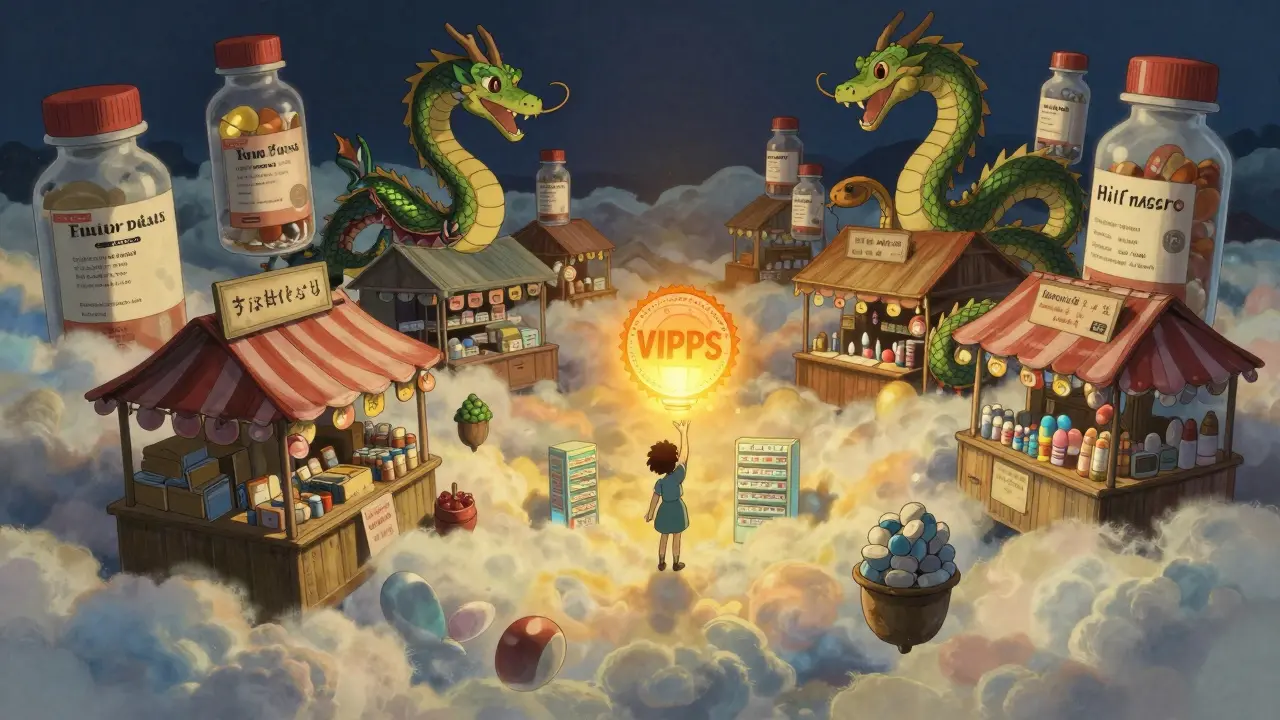
- Is the pharmacy licensed? In the U.S., look for the VIPPS seal from the National Association of Boards of Pharmacy. In Australia, check the TGA’s list of registered pharmacies. In the UK, verify with the GPhC.
- Are prices too good to be true? If Ozempic is $50 a pen when it normally costs $1,000, it’s fake. Period.
- Do they ship from overseas? If the website says “shipped from China” or “fulfilled by a global warehouse,” avoid it. Legitimate pharmacies in your country don’t outsource to foreign labs.
Also, never buy from social media. No legitimate pharmacy runs ads on Instagram or TikTok. If someone DMs you with a link to “discounted diabetes meds,” it’s a scam.
What to do if you already bought fake medicine
If you’ve taken a pill from an unverified website and feel sick - dizziness, chest pain, vomiting, trouble breathing - go to the ER immediately. Tell them you took an online-bought medication. That information could save your life.
Even if you feel fine, report it. In the U.S., file a report with the FDA’s MedWatch program at 1-800-FDA-1088 or [email protected]. In Australia, contact the TGA. In the UK, use the Yellow Card scheme. These reports help regulators track fake drugs and shut down operations.
Also, save the packaging, the pill bottle, and any emails or receipts. Law enforcement needs them to build cases.
How to get real medicine safely online
You don’t have to risk your life to save money. Here’s how to get real meds online without danger:
- Use your regular pharmacy’s online portal. Most offer mail delivery.
- Ask your doctor about patient assistance programs. Many drugmakers offer free or low-cost meds to people who qualify.
- Use verified pharmacy directories like the VIPPS list or the TGA’s register of pharmacies.
- Check prices at pharmacies like CVS, Walgreens, or local independents. Sometimes generic versions cost less than $10 a month.
- Don’t be afraid to talk to your doctor. They’ve heard it all before. There’s no shame in asking for help.
There’s no shortcut to safety. If a deal seems too good to be true, it is. And the cost isn’t just financial - it’s your health, your future, maybe your life.
Global efforts to fight back
It’s not just you against the criminals. Governments and health agencies are fighting back.
Interpol’s Operation Pangea has now run for 16 years. Each year, they shut down thousands of sites, arrest dozens of traffickers, and seize millions of fake pills. In 2025, they worked with 90 countries to take down criminal networks that spanned five continents.
The U.S. Drug Supply Chain Security Act (DSCSA) now requires every prescription drug package to have a unique digital identifier - like a barcode that can be traced back to the manufacturer. This makes it harder for fakes to slip through.
But technology alone won’t fix this. The real solution is education. People need to know that buying medicine online without a prescription isn’t a clever hack - it’s a gamble with their life.
Are all online pharmacies fake?
No. A small percentage - about 5% - are legitimate. Look for certifications like VIPPS (U.S.), TGA registration (Australia), or GPhC (UK). These pharmacies require prescriptions, have licensed pharmacists, and store drugs properly. But if a site doesn’t show proof of licensing, assume it’s fake.
Can counterfeit medicine make me sick even if I feel fine?
Yes. Some fake drugs contain inactive ingredients that cause long-term damage - like liver or kidney stress - without immediate symptoms. Others have inconsistent dosing, which can lead to drug resistance or dangerous side effects weeks later. Even if you feel okay now, you could be at risk for complications down the road.
Why are weight-loss drugs like Ozempic so often counterfeited?
Ozempic and similar drugs are expensive, in high demand, and often prescribed off-label for weight loss. Criminals know people will pay anything to get them - especially without a doctor’s visit. A single vial of real Ozempic can cost over $1,000. Fake versions sell for $50. That’s a 2,000% profit margin. That’s why they’re flooded with counterfeits.
What should I do if I see a website selling fake medicine?
Don’t buy from it. Report it. In the U.S., contact the FDA’s Office of Criminal Investigations. In Australia, report to the TGA. In the UK, use the MHRA’s online form. Include the website URL, screenshots, and any order details. These reports help authorities shut down operations before they hurt someone else.
Is it safe to buy over-the-counter meds online?
Even OTC drugs can be counterfeit. In 2025, the FDA warned about fake alli (orlistat) capsules sold online. They contained no active ingredient. Other fake versions had toxic fillers. Always buy OTC meds from licensed pharmacies - even if they’re not prescription-only. The risk isn’t zero.
Final warning
There’s no such thing as a safe shortcut when it comes to medicine. The internet makes it easy to find drugs - but not easy to find safe ones. Every fake pill you buy supports a criminal industry that profits from your fear, your pain, and your desperation.
Real medicine comes from real doctors and real pharmacies. If you need help, ask. If you can’t afford it, look for assistance programs. If you’re embarrassed, remember: your health isn’t something to hide.
One pill can kill. And it doesn’t have to be you.

11 Comments
Jake Nunez-11 January 2026
I saw a guy on Reddit last week who bought fake Ozempic off Instagram. Thought he was saving $900. Ended up in the ER with liver failure. No joke. His mom posted the pill bottle next to the receipt. The label looked like it was printed on a dot matrix printer from 1998.
Christine Milne-13 January 2026
It is an egregious failure of American public health policy that citizens are compelled to seek pharmaceuticals through illicit digital channels due to systemic cost inflation and the absence of universal healthcare. The commodification of medicine has created a fertile ground for transnational criminal enterprises to exploit vulnerable populations. This is not merely a matter of consumer caution-it is a moral indictment of our socioeconomic architecture.
Bradford Beardall-13 January 2026
Wait-so if a site has a VIPPS seal, it’s legit? But what if they fake the seal? I saw a video where someone used Photoshop to make a fake FDA logo look real enough to fool a pharmacist. How do you even verify that? I’m not tech-savvy but I’m not stupid either. I need a foolproof way to check this without calling a government hotline.
McCarthy Halverson-13 January 2026
Don’t buy from sites without a prescription
Check the address
Call the number
If it’s too cheap, it’s fake
Save the packaging
Report it
That’s it
Ashlee Montgomery-15 January 2026
We treat medicine like a product when it’s really a lifeline. The fact that people are gambling with their lives because they can’t afford insulin or semaglutide says more about our society than it does about the criminals selling the pills. The real crime isn’t the counterfeits-it’s the system that made them necessary.
neeraj maor-17 January 2026
Did you know the FDA and WHO are in on this? They let the fakes in to control population growth. Look at the stats-every time a new weight-loss drug goes viral, overdose deaths spike. Coincidence? No. They want people to be dependent on expensive meds so they keep paying for insurance and vaccines. The real poison is the system, not the pills.
Kunal Majumder-18 January 2026
Bro, I got my insulin from a site in India for $20 a vial. Real deal. My cousin works in a pharma warehouse there. They make the same stuff as the big brands. Just no fancy packaging. If you know where to look, you can get safe meds cheap. Don’t panic, just do your homework.
chandra tan-19 January 2026
My uncle in Delhi used to sell real generic meds online. He’d source from licensed Indian factories, test every batch, and ship with real tracking. He didn’t make much, but people lived because of him. The problem isn’t online pharmacies-it’s the ones that lie. There are good ones out there. They just don’t advertise on TikTok.
Dwayne Dickson-20 January 2026
It is fascinating how the neoliberal paradigm has normalized the commodification of physiological well-being to the extent that individuals are now incentivized to circumvent institutional safeguards in favor of algorithmically curated, unregulated pharmaceutical marketplaces. The cognitive dissonance required to trust a website that uses ‘pharmacist on call’ as a marketing hook is, frankly, a testament to the erosion of epistemic trust in Western institutions.
Ted Conerly-21 January 2026
Just use your local pharmacy’s mail service. CVS and Walgreens have deals for $10 generics. If you’re struggling, ask for help. No one’s gonna judge you. I’ve been there-diabetes, no insurance, scared to ask. Took me six months to work up the courage. Best decision I ever made.
Ian Cheung-22 January 2026
Man I used to think buying meds online was like buying a sneaker off StockX-risky but possible. Then my buddy took a fake Xanax and woke up screaming in the shower thinking his skin was melting. He’s fine now but he won’t touch anything that doesn’t come from a pharmacist with a white coat and a name tag. I don’t care if it’s $5 or $500-if it didn’t come from a place where someone actually went to school for this, I’m not touching it. Life’s too short for mystery pills