Nocebo Effect Estimator
Based on research showing that 50-76% of side effects in placebo groups are nocebo responses, this tool estimates how much your reported side effects might be influenced by expectations rather than the medication itself.
Please answer the questions below to get your personalized assessment.
Your Estimated Nocebo Effect
When you take a pill, you expect it to help. But what if some of the side effects you feel aren’t from the drug at all? What if they’re coming from your mind?
What Exactly Is a Nocebo Effect?
Most people know about the placebo effect-when a sugar pill makes someone feel better because they believe it will. But far fewer know about the nocebo effect, which is its dark twin. The nocebo effect happens when negative expectations cause real physical symptoms, even when no active drug is involved.
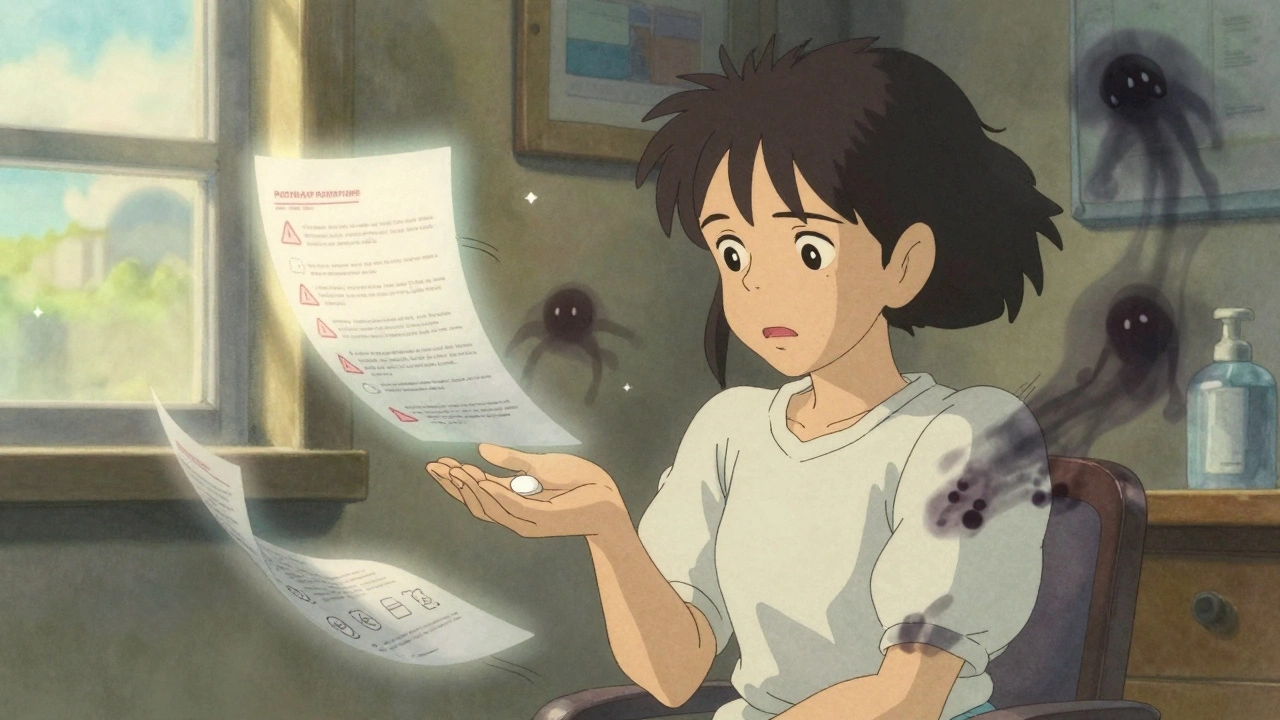
Imagine you’re in a clinical trial for a new migraine medication. You’re given a harmless pill labeled as the real drug. You read the patient information sheet: "Common side effects include nausea, dizziness, and fatigue." A day later, you feel nauseous. You assume the medicine is working-or at least, causing problems. But here’s the twist: you didn’t get the real drug. You got a placebo. Your symptoms came from reading the leaflet, not from chemistry.
Studies show that between 50% and 76% of all side effects reported in placebo groups of clinical trials are nocebo responses. That means, in many cases, the side effects patients blame on their medication are actually caused by fear, information, or past experiences.
How the Nocebo Effect Works in the Brain
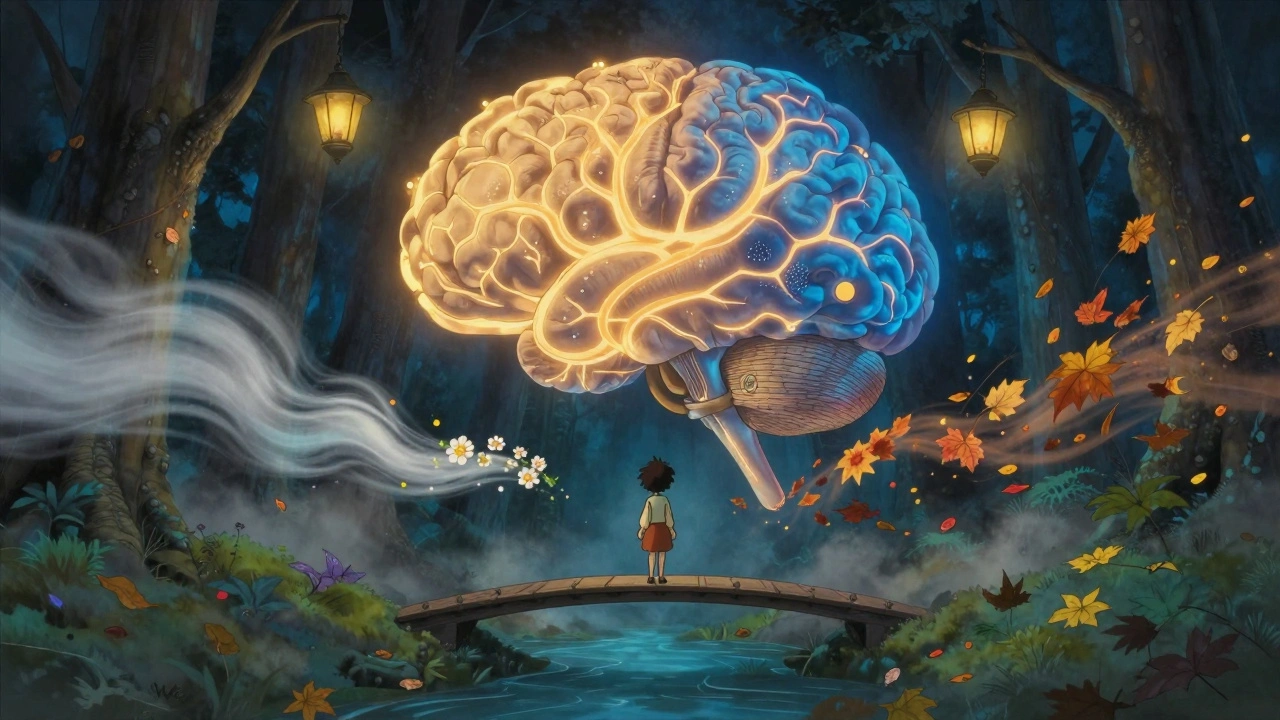
The nocebo effect isn’t "all in your head"-it’s very much in your body. Brain imaging studies show that when people expect pain or side effects, specific areas light up: the anterior cingulate cortex, the insula, and the prefrontal cortex. These regions control pain perception, stress responses, and autonomic functions like heart rate and digestion.
When you’re told a drug might cause headaches, your brain doesn’t just hear it-it prepares for it. Cortisol (the stress hormone) rises. Your nervous system goes on alert. Blood vessels constrict. Muscles tense. These aren’t imagined symptoms. They’re measurable physiological changes.
One 2022 study found that people who expected side effects from a placebo showed a 15-25% increase in cortisol, a 5-10 beat-per-minute rise in heart rate, and even subtle changes in immune markers. These are the same biological changes seen in people taking real medications with known side effects.
Where Do Nocebo Effects Come From?
Nocebo effects don’t appear out of nowhere. They’re triggered in three main ways:
- Verbal suggestions (70-80% of cases): What your doctor says, what’s written in the medication leaflet, even what you overhear in a waiting room.
- Observational learning (15-20%): Seeing someone else have a bad reaction-even on social media-can prime you to feel the same.
- Prior negative experiences (10-15%): If you had nausea from a drug before, you’re more likely to feel it again, even with a different one.
Consider the COVID-19 vaccines. In placebo-controlled trials, 76% of people who got a saline injection reported headaches or fatigue-symptoms that matched those reported by people who got the real vaccine. Why? Because they were told these side effects were common. Their brains anticipated them-and delivered.
Placebo vs Nocebo: A Direct Comparison
It’s easy to think of placebo and nocebo as opposites. But they’re more like mirror images with different weights.
| Feature | Placebo Effect | Nocebo Effect |
|---|---|---|
| Definition | Positive outcome from inert treatment due to positive expectations | Negative outcome from inert treatment due to negative expectations |
| Typical symptom change | 30-60% improvement in subjective symptoms | 20-45% worsening or new side effects |
| Duration | Often fades over time | Stays strong or even grows |
| Neurobiology | Activates endorphin and dopamine pathways | Activates stress, pain, and autonomic pathways |
| Impact on treatment | Improves effectiveness | Reduces adherence, increases visits |
| Common triggers | Trust in provider, positive framing | Warning labels, fear-based messaging, social media stories |
A 2025 study published in eLife Sciences found that nocebo effects were not only stronger than placebo effects-they were also more persistent. While placebo responses stayed steady over eight days, nocebo responses barely faded. That’s a big deal. It means negative expectations don’t just fade with time. They stick.
Real-World Examples Across Conditions
Nocebo effects aren’t rare. They’re everywhere.
- In migraine trials, 20-30% of patients on placebo reported nausea, dizziness, or fatigue-exactly the side effects of the real drugs being tested.
- In cancer treatment, 25-40% of patients on placebo reported nausea, even though they got no chemotherapy.
- In depression trials, 25-35% of placebo patients developed new symptoms like insomnia or agitation.
- In menopause studies, 30-40% of women on placebo reported hot flashes after being told they were common.
- In irritable bowel syndrome, 22-32% of placebo patients had symptom flare-ups after reading about possible side effects.
And here’s the kicker: a 2023 survey by the International Association for the Study of Pain found that 68% of chronic pain patients said they felt side effects from a medication-until they learned it was a placebo. Then the symptoms vanished.
Why This Matters for Patients and Doctors
This isn’t just academic. Nocebo effects cost money, hurt lives, and stop people from getting help.
When patients believe they’re having side effects from a drug-when those side effects are actually nocebo-they often stop taking it. Studies show 25-35% of patients discontinue treatment because of perceived side effects that turn out to be nocebo. That’s not just a personal loss-it’s a public health problem.
And it’s expensive. According to data from Medicare claims, nocebo effects lead to $1.2 billion in unnecessary healthcare costs each year in the U.S. alone. That includes extra doctor visits, blood tests, and even new prescriptions to treat side effects that never should have happened.
Doctors are caught in a bind. They have to inform patients about risks. But the way they do it can trigger the very side effects they’re trying to warn against.
How to Reduce Nocebo Effects
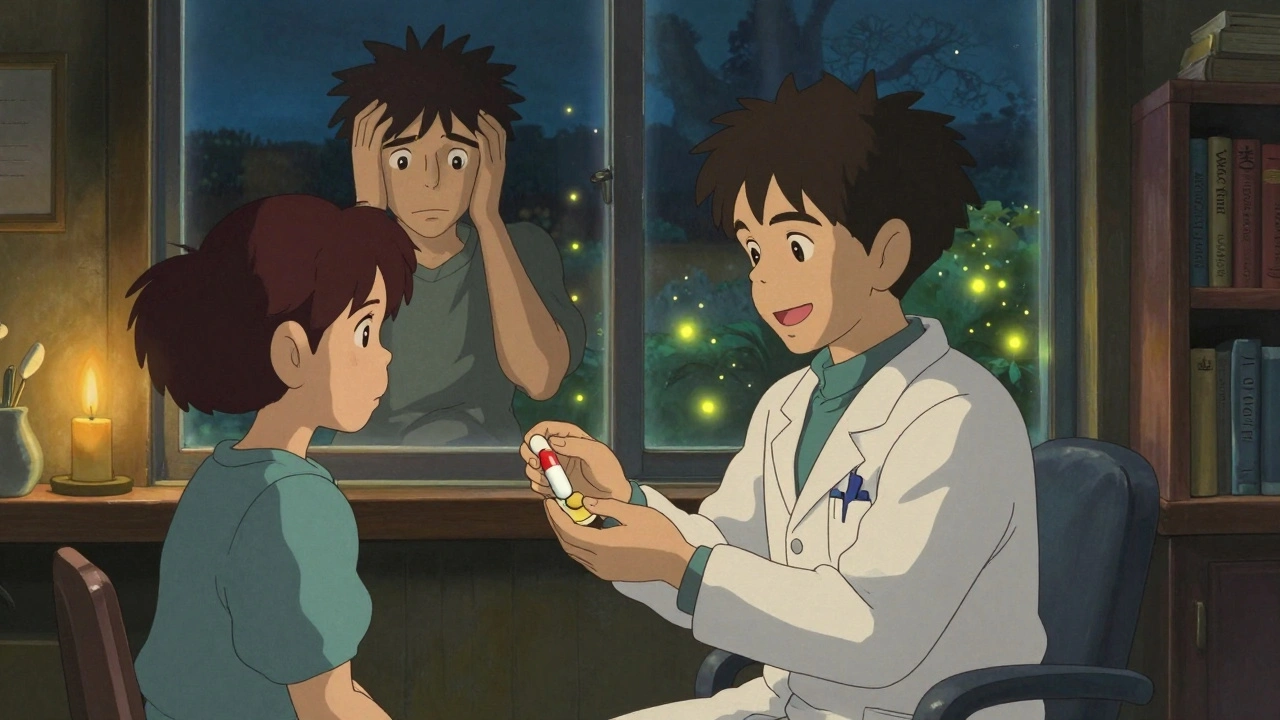
It’s not about hiding information. It’s about delivering it smarter.
Research shows a few simple changes make a big difference:
- Use absolute numbers, not percentages. Saying "3 out of 100 people get this side effect" is less scary than "3% risk." It reduces nocebo responses by 15-25%.
- Frame side effects as temporary. Instead of "You may feel dizzy," say "Some people feel a little dizzy for the first few days, and it goes away."
- Emphasize benefits first. Start with what the drug does well, then mention side effects briefly. This shifts focus from fear to hope.
- Avoid listing every possible side effect. If you say "Possible side effects include headache, nausea, fatigue, hair loss, liver damage, depression, and death," people will focus on the worst ones-even if they’re extremely rare.
- Use open-label placebos. In some trials, patients were told outright: "This is a sugar pill, but studies show it can still help you feel better." And it did-by 25-35%. The mind responds to honesty, not deception.
Some clinics now use AI tools to analyze how patients speak during consultations. If someone uses phrases like "I’m scared this will make me sick," or "I had this happen before," the system flags them as high-risk for nocebo responses. Doctors then adjust their language accordingly.
The Bigger Picture
The FDA and European Medicines Agency now require drug makers to analyze nocebo responses in clinical trials. They’re starting to separate true drug side effects from those caused by expectation. In 2023, the FDA proposed that up to 40% of reported side effects in placebo groups might be nocebo-and those shouldn’t be counted as drug-related.
Pharmaceutical companies are spending $50-75 million per drug to redesign patient information materials, train staff, and test communication strategies. They’re learning that how you tell people about side effects can be as important as the drug itself.
And medical schools are starting to teach this. By 2025, the International Council for Harmonisation plans to require nocebo response rates to be reported alongside drug efficacy data. That means future drug labels might say something like: "In clinical trials, 30% of patients on placebo reported nausea-suggesting a strong nocebo component."
This isn’t about blaming patients. It’s about understanding the powerful role the mind plays in health. We’ve spent decades thinking of drugs as chemical solutions. But now we’re realizing: the mind is a biological system too. And it responds to words, fears, and stories just as powerfully as it responds to pills.
What You Can Do
If you’re taking medication and worried about side effects:
- Ask your doctor: "What’s the chance this side effect is actually from the drug, versus from fear or expectation?"
- Don’t assume every new symptom means the drug is wrong. Some are just your brain reacting to what you’ve been told.
- If you’ve had bad side effects before, tell your doctor. That history matters.
- Be careful what you read online. Social media stories are powerful-but they’re not science.
If you’re a caregiver or someone supporting a patient:
- Don’t say things like, "I heard this drug makes people really sick."
- Focus on what’s working. "You’ve slept better since starting this, right?"
- Remind them: side effects don’t always mean the drug isn’t working-they might just mean your mind is listening too closely.
Can the nocebo effect cause real physical harm?
Yes. Nocebo effects trigger real biological changes: increased cortisol, higher heart rate, muscle tension, and even immune system shifts. These aren’t imagined symptoms-they’re measurable physiological responses. In extreme cases, nocebo-induced stress can worsen conditions like hypertension or trigger migraines. The body reacts to belief as if it’s real.
Are nocebo effects more common than we think?
Extremely common. Studies show 50-76% of side effects reported in placebo groups of clinical trials are nocebo responses. In some cases, like the COVID-19 vaccines, over 70% of "side effects" in placebo recipients matched those in the real drug group. This means a large portion of what we call "drug side effects" may actually be expectation-driven.
Can doctors avoid causing nocebo effects?
Yes, with training. Doctors can reduce nocebo responses by using absolute risk numbers ("3 in 100" instead of "3%"), framing side effects as temporary, and emphasizing treatment benefits before risks. Training in communication techniques can cut nocebo responses by 30-40%. The goal isn’t to hide information-it’s to deliver it in a way that doesn’t trigger fear.
Do placebo pills work even if you know they’re fake?
Surprisingly, yes. In trials for irritable bowel syndrome and chronic pain, patients who were told outright they were taking a sugar pill still reported 25-35% symptom improvement. The mind responds to the ritual of treatment, the attention from the provider, and the belief that healing is possible-even without deception.
Why do some people experience nocebo effects more than others?
People with anxiety disorders, past negative medical experiences, or a tendency to catastrophize are 2-3 times more likely to experience nocebo effects. Genetic factors also play a role-certain variations in the COMT gene are linked to 2.5 times higher nocebo susceptibility. It’s not about being "weak-minded." It’s about biology and history.
13 Comments
Clare Fox- 7 December 2025
so like... our brains are basically overeager babysitters? they see "side effects" on a label and go full alarm mode. not even the pill has to do anything. just the *idea* of it makes the body panic. wild.
Priya Ranjan- 8 December 2025
People are so gullible. You read a warning and immediately your body betrays you? That’s not science, that’s weakness. If you can’t handle a little nausea from reading a pamphlet, maybe you shouldn’t be taking meds at all.
Billy Schimmel- 8 December 2025
so you’re telling me my headache after reading the label… was just my brain being dramatic? cool. i’ll just tell it to chill next time. thanks for the free therapy, science.
Inna Borovik- 9 December 2025
Let’s not romanticize this. The nocebo effect is a statistical artifact inflated by poor trial design. 76% of placebo side effects? That’s not a revelation-it’s a failure of blinding. And now we’re giving patients permission to blame their symptoms on psychology? That’s dangerous. Real pain is real pain. Stop gaslighting chronic illness.
Mayur Panchamia- 9 December 2025
HAHAHAHA!! So now the West is blaming the patient for being too sensitive?? In India, we take medicine like soldiers-no whining, no labels, no fear! You read the leaflet and get sick? That’s your mind being weak! We don’t have time for this Western psycho-babble!!
Kenny Pakade-10 December 2025
Oh great. Another article saying the placebo effect is real, but only the bad kind. So now if I feel tired after a pill, it’s my fault? What’s next? Are we gonna say cancer is just a bad thought? This is how they gaslight people into staying on meds they don’t need.
brenda olvera-10 December 2025
my grandma took aspirin every day and never read the label. never had a side effect. maybe the real problem is we overthink everything now. just take the pill, breathe, move on.
Myles White-12 December 2025
It’s fascinating how the brain doesn’t just respond to chemicals but to narratives. The language we use around health-whether it’s from a doctor, a drug leaflet, or a Reddit thread-actually rewires our autonomic nervous system. The nocebo effect isn’t just about fear; it’s about the weight of expectation. When you’re told something is likely to happen, your brain doesn’t wait for confirmation-it starts producing the symptoms preemptively. This isn’t mind over matter-it’s mind creating matter. And that means the way we communicate medical info isn’t just ethical-it’s biological. We’re not just informing people; we’re prescribing physiology.
Brooke Evers-12 December 2025
I’ve seen this with my mom. She got prescribed a new blood pressure med and read the side effects list-got scared, started feeling dizzy, thought it wasn’t working. We talked about it, and she realized she’d been fixating on the worst-case scenarios. She stopped reading the leaflet, focused on how she felt instead of what she was told she’d feel, and within a week, the dizziness vanished. It wasn’t the drug-it was the fear. And once she shifted her focus, her body followed.
Chris Park-14 December 2025
Of course the government and pharma want you to believe it’s all in your head. That’s how they avoid liability. The real side effects are hidden in the fine print. They don’t want you to know that 90% of the side effects are real-they just want you to think you’re imagining them so you don’t sue. Wake up.
Saketh Sai Rachapudi-15 December 2025
India knows truth: if you think you're sick, you're sick. But we don't blame the pill, we blame the weak mind. Nocebo? More like no-brain. Stop making excuses. Take the medicine. Shut up. Get better.
joanne humphreys-16 December 2025
I wonder if the way we talk about side effects is also shaped by culture. In some places, discomfort is normalized. In others, it’s treated like a crisis. Maybe the nocebo effect isn’t just about information-it’s about how much space we give fear in our daily lives.
Nigel ntini-16 December 2025
This is why I always start with the good stuff when I talk to patients. ‘This will help you sleep better.’ Then, ‘Some people feel a little light-headed at first, but it usually passes.’ It’s not about hiding anything-it’s about giving the mind a better story to believe in. And guess what? They heal faster.