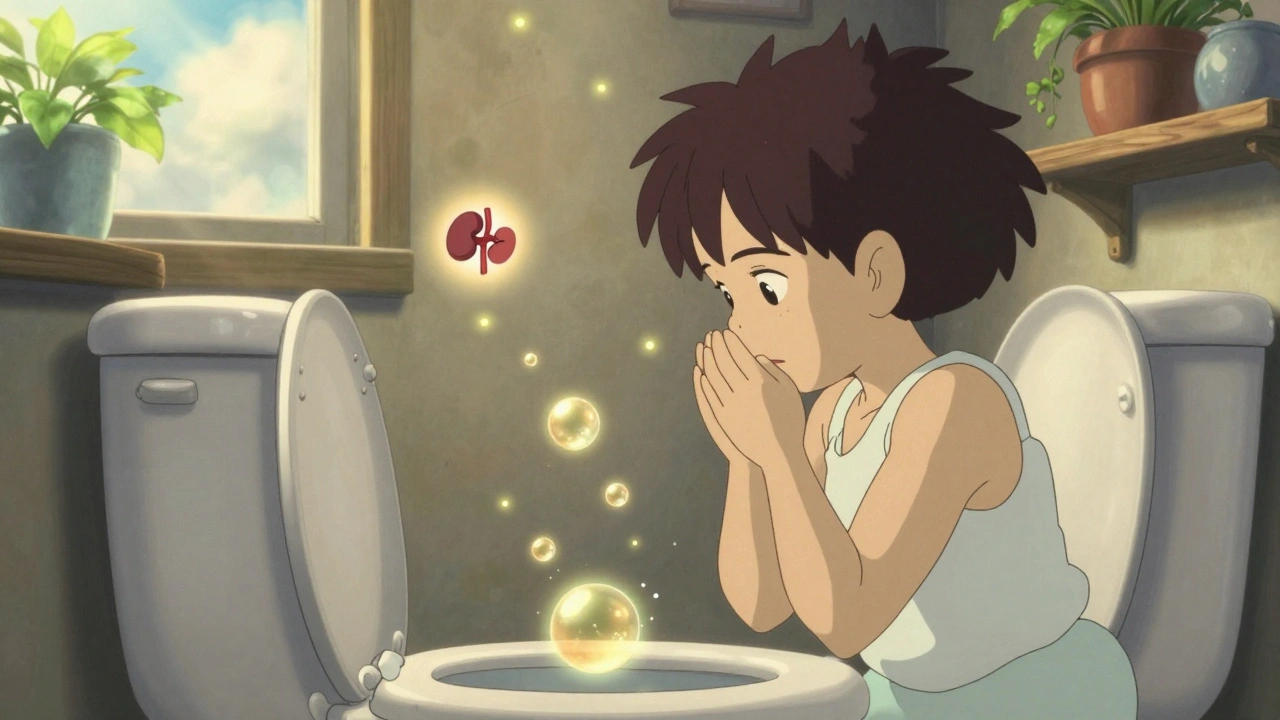
When your urine looks foamy or bubbly, it’s not just soap residue. It could be your kidneys leaking protein - a sign something’s wrong inside. This condition, called proteinuria, doesn’t always cause symptoms, but when left unchecked, it can lead to permanent kidney damage. The good news? You can catch it early, understand what’s causing it, and take steps to protect your kidneys before it’s too late.
What Exactly Is Proteinuria?
Your kidneys are like high-precision filters. They keep essential proteins like albumin in your blood while letting waste and extra fluid pass out as urine. Healthy kidneys let through less than 150 milligrams of protein per day - barely measurable. When that number climbs above 30 mg/g of creatinine in a spot urine test, you have proteinuria. That’s the clinical threshold doctors use to flag trouble.
It’s not just about quantity. The type of protein matters too. Albumin is the most common one found in urine when kidneys are damaged. But if you see other proteins like Bence-Jones proteins, that could point to something else - like multiple myeloma. Proteinuria isn’t a disease itself. It’s a warning light.
Why Does Protein Leak Into Urine?
Not all proteinuria is the same. There are three main types:
- Transient proteinuria - Temporary, often caused by stress, fever, intense exercise, or dehydration. Up to 25% of healthy adults experience this at some point. It goes away on its own.
- Orthostatic proteinuria - Happens only when standing. Common in teens and young adults. Your urine is normal in the morning but shows protein later in the day. Almost always harmless.
- Persistent proteinuria - This is the red flag. It means your kidneys are damaged. The top causes? Diabetes (40% of cases), high blood pressure (25%), and glomerulonephritis (15%). Autoimmune diseases like lupus, preeclampsia in pregnancy, and even heart failure can also trigger it.
Diabetes and high blood pressure are the big players. They slowly wear down the tiny filtering units in your kidneys - the glomeruli. Once they’re damaged, proteins slip through. The longer this goes on, the worse the damage gets.
How Do You Know You Have It?
Here’s the problem: most people don’t feel anything at first. Up to 70% of people with mild proteinuria (under 500 mg/day) have no symptoms. That’s why screening is so important - especially if you have diabetes, high blood pressure, or a family history of kidney disease.
When protein levels rise above 1,000 mg/day, signs start showing up:
- Foamy or bubbly urine (85% of symptomatic cases)
- Swelling in feet, ankles, hands, or face (75%)
- Fatigue and muscle cramps at night (60% and 30%)
- Frequent urination, nausea, or loss of appetite
If you’re losing more than 3,500 mg of protein daily, you might have nephrotic syndrome - a serious condition with low blood albumin, high cholesterol, and severe swelling. That needs immediate care.
How Is It Tested?
Doctors don’t guess. They measure. Here’s how it works:
- Dipstick test - Quick and cheap. Used in clinics and doctor’s offices. But it’s not always accurate - it can miss low levels of protein. Sensitivity drops to 50% if protein is barely above normal.
- Urine albumin-to-creatinine ratio (UACR) - The gold standard for spot testing. Measures albumin (the main protein) compared to creatinine (a waste product). A value over 30 mg/g is abnormal. Over 300 mg/g means severe proteinuria.
- 24-hour urine collection - The most accurate. You collect all your urine for a full day. But it’s messy. Many people forget a sample or overfill the container. About 20-30% of people don’t complete it correctly.
Most doctors now use UACR because it’s just as reliable as the 24-hour test but way easier. If your UACR is above 30, they’ll likely repeat it in a few weeks to make sure it’s persistent - not a one-time spike.

What Happens If You Don’t Treat It?
Proteinuria doesn’t just sit there. It’s a sign your kidneys are breaking down. And once they’re damaged, they don’t heal well.
Studies show that people excreting more than 1 gram of protein per day have a 50% chance of developing end-stage kidney disease within 10 years - if nothing changes. That means dialysis or a transplant. And proteinuria doesn’t just hurt your kidneys. It raises your risk of heart attacks and strokes because damaged kidneys mess with fluid balance, blood pressure, and cholesterol.
But here’s the key: reducing protein in your urine directly improves your outcome. Every 50% drop in protein excretion lowers your risk of kidney failure by 30%. That’s not a small win. That’s life-changing.
How to Reduce Proteinuria and Protect Your Kidneys
There are three pillars to stopping kidney damage: medication, diet, and control of underlying conditions.
Medications That Work
Two classes of blood pressure drugs are first-line for proteinuria:
- ACE inhibitors (like lisinopril)
- ARBs (like losartan)
These don’t just lower blood pressure - they directly protect the kidney filters. They reduce protein leakage by 30-50%. But side effects like a dry cough affect 40% of users, and some people stop taking them. If that happens, talk to your doctor. There are alternatives.
Newer drugs are making a big difference:
- SGLT2 inhibitors (like canagliflozin) - Originally for diabetes, they cut proteinuria by 30-40% and slow kidney decline by 30%.
- Finerenone - A non-steroidal mineralocorticoid blocker. In trials, it reduced proteinuria by 32% and slowed kidney damage in diabetic patients.
- Immunosuppressants - For lupus or other autoimmune causes, drugs like corticosteroids or rituximab can bring proteinuria into remission in 60-70% of cases.
Diet Changes That Help
What you eat matters. Too much protein can make your kidneys work harder - but too little can make you weak. The sweet spot? 0.6 to 0.8 grams of protein per kilogram of body weight per day.
For a 70 kg person, that’s about 42-56 grams of protein daily. That’s less than two chicken breasts. A renal dietitian can help you plan meals with the right balance of protein, sodium, and potassium. High-fiber, low-salt diets also help lower blood pressure and reduce swelling.
Studies show sticking to this diet cuts proteinuria by 15-25% in six months.
Control Your Blood Pressure and Blood Sugar
If you have diabetes, keep your HbA1c under 7%. If you have high blood pressure, aim for under 130/80. Every point lower means less strain on your kidneys. Many people don’t realize that even “mild” high blood pressure can silently damage kidneys over years.
How Often Should You Get Tested?
It depends on your risk:
- Low risk (no diabetes, no hypertension): Once a year during routine checkups.
- High risk (diabetic, hypertensive, obese, family history): Every 6 months.
- Already diagnosed with proteinuria: Every 3-6 months. During treatment, check monthly until levels drop.
Your goal? A 30% reduction in proteinuria within 3 months of starting treatment. If you’re not seeing that, your doctor needs to adjust your plan.

What’s New in Proteinuria Detection?
Technology is catching up. Smartphone apps that analyze urine color and foam with a camera are now 85% accurate compared to lab tests. Not perfect, but useful for tracking changes at home.
Researchers are also finding new biomarkers. Urinary TNF receptor-1 levels, for example, can predict who’s at highest risk of rapid kidney decline - even before proteinuria gets worse. That means future treatments could be targeted before damage spreads.
Drugs like bardoxolone methyl are being tested for rare conditions like Alport syndrome, showing 35% proteinuria reduction in early trials. The future is personalized - based on your genes, your protein profile, and your risk level.
What Should You Do Now?
If you’re healthy and young - no risk factors - don’t panic. But if you have diabetes, high blood pressure, or swelling in your legs, get tested. Don’t wait for symptoms. Proteinuria is silent until it’s too late.
Start with a simple urine test. Ask your doctor for a UACR. If it’s above 30, follow up. Don’t ignore it. Treat the cause - whether it’s blood sugar, blood pressure, or something else. Stick to your meds. Watch your diet. Track your swelling. Small steps now can keep you off dialysis for decades.
Your kidneys don’t shout. They whisper. Listen before it’s too late.
Can proteinuria go away on its own?
Yes - but only if it’s transient or orthostatic. Temporary proteinuria from exercise, fever, or stress usually clears within a day or two. Orthostatic proteinuria, common in teens, often disappears by early adulthood. But if protein stays in your urine for more than a few weeks, it’s persistent and needs medical evaluation. Don’t assume it’s harmless.
Is foamy urine always a sign of kidney problems?
Not always. Foamy urine can happen after rapid urination, dehydration, or even from toilet bowl cleaners. But if the foam lasts more than a few minutes, is frequent, and you have swelling or fatigue, it’s likely protein. The key is consistency - occasional foam isn’t a crisis. Daily foam is a red flag.
Can I test for proteinuria at home?
You can buy dipstick test strips online or at pharmacies - but they’re not as reliable as lab tests. They can miss low levels or give false positives. For accurate results, get a UACR test from your doctor. However, home test strips can be useful for tracking trends if you already have a diagnosis. Just don’t rely on them for diagnosis.
Do I need to stop eating protein if I have proteinuria?
No - but you should reduce it. Your body still needs protein to repair tissue and fight infection. The goal isn’t to eliminate it, but to cut it to 0.6-0.8g per kg of body weight. Too little can cause muscle loss and weakness. A renal dietitian can help you find the right balance without harming your health.
What’s the difference between UACR and UPCR?
UACR measures albumin-to-creatinine ratio - the most common protein in kidney damage. UPCR measures total protein-to-creatinine. UACR is more sensitive for early kidney disease, especially in diabetes. UPCR is better if you have other protein types in your urine, like in multiple myeloma. Most doctors use UACR first. If results are unclear, they’ll order UPCR.
Can proteinuria cause high blood pressure?
It’s usually the other way around - high blood pressure causes proteinuria. But once protein leaks into urine, it can make blood pressure worse. Damaged kidneys can’t regulate fluid and salt properly, leading to fluid retention and higher pressure. So proteinuria and high blood pressure feed each other. Controlling both is critical.
Are there natural remedies for proteinuria?
No proven natural cures exist. Supplements like fish oil or turmeric may help reduce inflammation, but they don’t replace medication. Diet and blood pressure control are the only proven methods. Be cautious of claims online - kidney damage is serious. Rely on science, not internet trends.
How long does it take to see results after starting treatment?
You should see a drop in proteinuria within 4-8 weeks of starting ACE inhibitors, ARBs, or SGLT2 inhibitors. The bigger the drop - ideally 30% or more - the better your long-term kidney outcome. If there’s no improvement after 3 months, your treatment plan needs adjusting. Don’t wait.
Next Steps: What to Do Today
If you’re at risk - diabetic, hypertensive, overweight, or over 50 - get a UACR test now. Don’t wait for swelling or foamy urine. Early detection saves kidneys.
If you already have proteinuria:
- Confirm the diagnosis with a repeat UACR in 2-4 weeks.
- Ask your doctor about ACE inhibitors or ARBs - even if your blood pressure is normal.
- See a renal dietitian to adjust your protein intake.
- Check your blood pressure and blood sugar daily if you have those conditions.
- Track swelling and urine foaminess at home - report changes immediately.
Proteinuria is not a death sentence. It’s a signal. And signals can be answered - with the right steps, taken early.


8 Comments
John Webber- 2 December 2025
foamy pee = kidney failure?? bro i drank a gallon of water after the gym and my urine looked like a soda commercial. stop scaring people. its probably just dehydration. 🤷♂️
Shubham Pandey- 3 December 2025
uacr test? just get a dipstick. cheaper. faster. same result.
Elizabeth Farrell- 3 December 2025
I just want to say how incredibly important this post is. I was diagnosed with proteinuria two years ago after my mom had a stroke and I realized I’d been ignoring my blood pressure for years. I started on losartan, cut back on salt, and now my UACR is under 20. It’s not easy, but it’s worth it. You’re not alone. Small steps every day add up. Your kidneys are working for you-give them a chance to heal. 💛
Sheryl Lynn- 4 December 2025
Ah, the modern medical industrial complex’s favorite scapegoat: proteinuria. A poetic symptom, really-your body’s silent sonnet to systemic collapse. The real tragedy? We’ve reduced the sublime mystery of renal filtration to a 30 mg/g metric, as if quantification equals understanding. SGLT2 inhibitors? How quaint. We’re treating symptoms like they’re metaphors. 🌌
Paul Santos- 4 December 2025
UACR > 30 = bad. But let’s be real-this is just another biomarker we’ve elevated to gospel because it’s easy to measure. The real question: why do we assume all proteinuria is pathological? Evolution didn’t design kidneys to be perfect filters-they’re leaky by design. Maybe proteinuria isn’t a bug… it’s a feature of a system under stress. 🤔😂
Eddy Kimani- 6 December 2025
Fascinating breakdown. I’m curious-how do SGLT2 inhibitors reduce proteinuria mechanistically? Is it just hemodynamic (reducing intraglomerular pressure), or are there direct podocyte-protective effects via ketone metabolism? Also, any data on finerenone vs. SGLT2i head-to-head in non-diabetic CKD?
Chelsea Moore- 6 December 2025
I CAN’T BELIEVE PEOPLE ARE STILL IGNORING THIS!!! I had proteinuria for 3 years and thought it was ‘just stress’-and then I got nephrotic syndrome!!! I was swollen like a balloon, lost 20 lbs of muscle, and spent 3 weeks in the hospital!!! DO NOT WAIT!!! GET TESTED!!! YOUR KIDNEYS ARE CRYING!!!
John Biesecker- 8 December 2025
you know… we’re so obsessed with measuring things-UACR, creatinine, eGFR-that we forget kidneys are alive. they breathe, they adapt, they whisper. i used to think protein in urine meant ‘broken’… now i think it means ‘trying to tell you something’. maybe the real cure isn’t a drug… it’s listening. 🌱💧