
Have you ever woken up to find your face feeling tight or puffy, perhaps noticing your rings don't fit quite right anymore? Or maybe you've seen bubbles in the toilet that won't go away after flushing? These aren't just random quirks of your day; they could be early whispers from your kidneys telling you something is wrong.
Nephrotic syndrome is not a single disease itself, but a cluster of signs indicating significant stress on your kidney filters. Renal Filtration Failure refers to the breakdown of the glomeruli, allowing vital proteins to leak out of your body. Instead of holding onto these essential building blocks, your body dumps them into your urine. While it sounds complex, understanding this condition is the first step toward managing it effectively.
The Core Mechanics: Why Does Protein Leak?
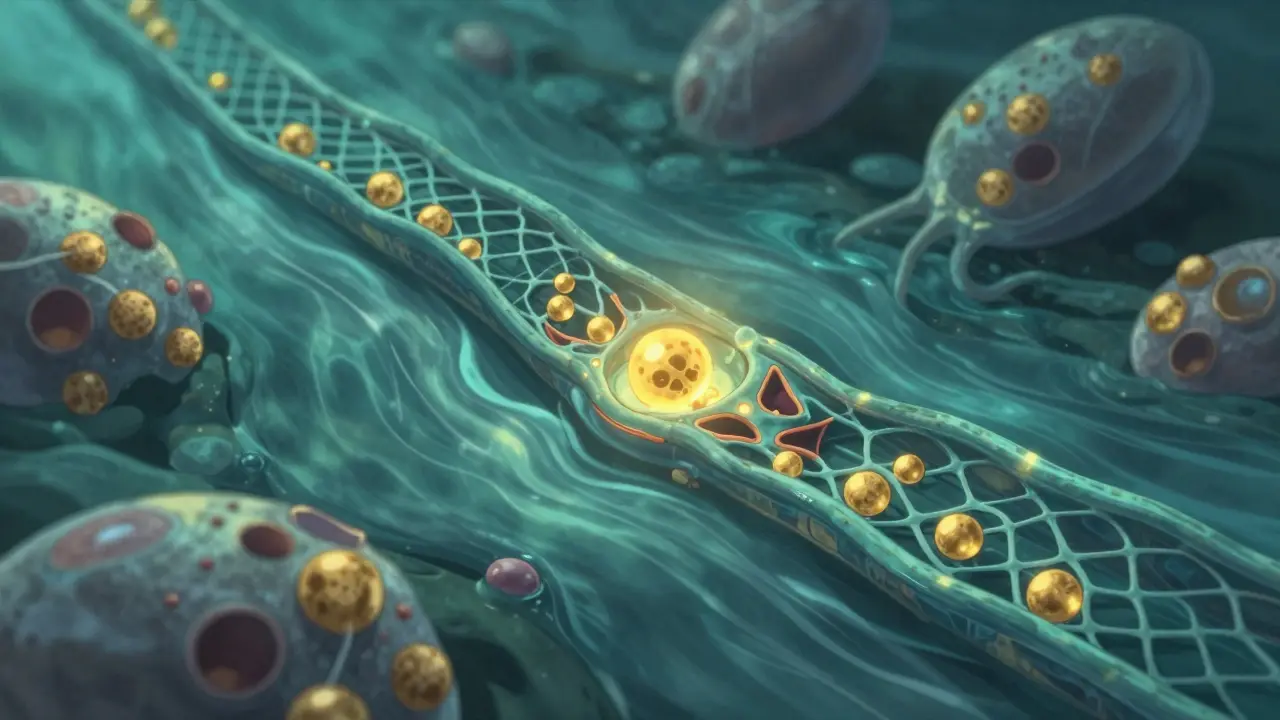
Think of your kidneys as a sophisticated coffee filter. Inside, tiny structures called glomeruli are clusters of capillaries responsible for filtering waste while keeping blood cells and large proteins in circulation do the heavy lifting. Under healthy conditions, they act like a bouncer at a club-only small things like water, salts, and toxins get past them. Large molecules, specifically proteins like albumin, get turned away.
In nephrotic syndrome, the barrier gets compromised. Imagine the filter mesh tearing or the walls of the podocytes-specialized cells wrapping the filter-becoming damaged. When this happens, massive amounts of protein escape into the urine. A hallmark sign is heavy proteinuria defined as excreting more than 3.5 grams of protein per 24 hours in adults.
This loss triggers a chain reaction. Because your blood loses protein, the fluid balance shifts. Proteins normally help keep fluid inside your blood vessels. Without them, liquid seeps into your tissues, causing swelling known as edema abnormal accumulation of fluid in the body's tissues, often visible around eyes and legs.
The Big Four: Recognizing Key Signs
Medical professionals look for a specific constellation of symptoms to diagnose the condition. If you notice a combination of the following, it is worth speaking to a doctor immediately.
| Symptom/Sign | Description | Clinical Threshold |
|---|---|---|
| Heavy Proteinuria | Loss of protein in urine | > 3.5g / 24 hrs |
| Hypoalbuminemia | Low serum protein levels | < 3.0 g/dL |
| Edema | Swelling of tissue | Visible puffiness/weight gain |
| Hyperlipidemia | Elevated fat levels in blood | Cholesterol often > 300 mg/dL |
Notice how hyperlipidemia appears on the list? It seems counterintuitive, but when your liver notices low protein levels in your blood, it tries to compensate by churning out more lipoproteins, raising your cholesterol significantly. It is a classic domino effect triggered by the initial kidney damage.
Who Is Most Affected?
You might assume this is primarily an adult issue due to high-stress lifestyles, but the reality paints a different picture based on age. The leading cause varies drastically depending on who you ask.
For children, particularly those between ages two and six, the most common culprit is Minimal Change Disease (MCD) a kidney disorder causing sudden onset of nephrotic syndrome, most prevalent in young children. This accounts for roughly 85 to 90 percent of cases in pediatric populations. Fortunately, children with MCD generally respond well to treatment.
Adults, however, face a harder path. Their cases are more often caused by underlying conditions. We see higher prevalence of Focal Segmental Glomerulosclerosis (FSGS) scarring of parts of the kidney's filtering units, common in adult-onset cases and Membranous Nephropathy an autoimmune-related thickening of the kidney membranes. Additionally, systemic diseases play a larger role here. Diabetes mellitus is a major driver, responsible for up to 30 percent of adult nephrotic cases in Western countries. Other secondary triggers can include Lupus (Systemic Lupus Erythematosus) or certain viral infections.
How Doctors Pinpoint the Cause
Diagnosing the syndrome is one thing; finding the "why" behind it is another. While urine tests can tell you protein is leaking, they rarely tell you exactly what broke the filter. For that, we often need more than a simple dipstick.
A standard work-up begins with quantifying the loss. You might provide a 24-hour urine sample to measure exactly how much protein is slipping through. Simultaneously, blood tests check albumin and creatinine levels to gauge overall kidney function.
If the diagnosis remains unclear or if steroids fail to work, a kidney biopsy a procedure where a small tissue sample is taken from the kidney for microscopic examination becomes crucial. It is a minor surgical procedure where doctors remove a tiny piece of kidney tissue. Under a microscope, they can distinguish between MCD, FSGS, or other pathologies like Amyloidosis. This step is vital because treating MCD requires a different approach compared to treating diabetic nephropathy.
Treatment Approaches and Management
The goal of treatment is twofold: stop the protein leak and manage the swelling. How doctors proceed depends heavily on the underlying cause identified during the workup.
First-Line Therapy: The Steroid Protocol
If the cause is likely inflammatory, such as Minimal Change Disease, Corticosteroids potent anti-inflammatory medications used to suppress immune response in kidney disease are the gold standard. Medications like Prednisone are typically prescribed for several weeks. For children, remission rates are impressive-often hitting 80 to 90 percent. Adults tend to have a harder road, with lower response rates and higher chances of the condition returning.
Patients often worry about side effects, especially weight gain or mood swings. These are known, manageable issues. The key is balancing the suppression of the immune system without causing total vulnerability to infections.
Supportive Care and Blood Pressure Control
Beyond stopping the inflammation, we must protect the kidney from further pressure. High blood pressure damages kidneys further. This is where ACE Inhibitors medications that reduce pressure inside the kidney's filtering units to decrease protein loss or Angiotensin Receptor Blockers (ARBs) come in. Studies show these drugs alone can cut protein leakage by up to 50%, even before considering their blood pressure benefits.
Diet plays a massive role too. Reducing salt intake to below 2,000mg daily helps shrink edema within three days. Patients also need to monitor protein consumption-not eating too little (which starves the body) but avoiding excess protein that overworks the remaining kidney function.
Advanced Therapies for Resistant Cases
Not everyone responds to steroids. About 10-15 percent of children and many adults develop steroid-resistant nephrotic syndrome. Here, doctors move to calcineurin inhibitors like Tacrolimus or Cylosporine. These suppress the immune system via a different pathway.
In recent years, monoclonal antibodies like Rituximab have gained traction for frequent relapsers. And research continues; new agents targeting endothelin receptors are showing promise in reducing proteinuria by nearly 50 percent in clinical trials, offering hope for those unresponsive to traditional immunosuppression.

Understanding the Risks
Living with this condition isn't just about swelling. There is a silent danger lurking beneath the surface. The loss of anticoagulant proteins in your blood puts you at significantly higher risk for clotting. Renal vein thrombosis occurs in 10 to 40 percent of adult cases, especially when albumin drops below 2.0 g/dL.
Infection is another major concern. The leaked proteins include immunoglobulins (antibodies), leaving you weaker against bacteria. Pneumonia and cellulitis are common hospitalization reasons during active phases. Therefore, vaccination status must always be updated, though live vaccines are avoided while on high-dose steroids.
Living Well with Diagnosis
Fear of kidney failure often looms large for patients. However, prognosis varies wildly. Children with minimal change disease often have excellent long-term survival rates exceeding 95 percent over a decade. For adults with FSGS, management focuses on slowing progression. With modern therapy adherence, maintaining normal blood pressure and strict monitoring, many live productive lives despite the diagnosis. Regular lab checks remain essential to catch flares early.
Can Nephrotic Syndrome be cured permanently?
While some causes like Minimal Change Disease can be managed successfully with frequent relapses, others may progress to chronic kidney disease. Permanent cure depends on the underlying pathology; for instance, controlling diabetes or reversing membranous nephropathy can sometimes lead to complete remission of symptoms.
Is foamy urine always a sign of kidney problems?
Foamy urine is a strong indicator of proteinuria but can be temporary due to dehydration or fast urination. If the foam persists consistently across multiple trips to the bathroom, it warrants a urine test to rule out protein leakage.
Does diet affect the severity of the condition?
Yes, sodium restriction directly reduces edema, and moderate protein intake prevents worsening kidney strain. Dietary changes are not optional but are integral to the medical treatment protocol alongside medication.
Are children at risk for permanent kidney damage?
Most children with Minimal Change Disease recover fully. However, steroid-resistant cases or those progressing to FSGS carry a higher risk of eventual kidney failure, necessitating long-term specialist monitoring.
When should I call my doctor regarding swelling?
Immediate contact is advised if swelling is accompanied by shortness of breath, chest pain, or rapid weight gain (indicating severe fluid retention), as these could signal dangerous complications like pulmonary edema or heart strain.




1 Comments
Amber Armstrong-30 March 2026
I really appreciate how deeply this topic is explored here because it feels like something many people overlook until it is too late for proper intervention. The description of waking up with puffy eyes resonates so strongly with my own experiences watching friends struggle silently without the right vocabulary to explain their fear. It is heartbreaking to think about how the body betrays itself by holding onto fluid in such visible ways while losing vital proteins into the toilet bowl. I always find myself wondering why the education system never covers these kidney mechanics more thoroughly during high school health classes. When you consider that children make up such a large portion of diagnosed cases it changes the narrative around who needs protection most urgently. Seeing the table listing hypoalbuminemia alongside hyperlipidemia helps me understand the domino effect rather than viewing symptoms in isolation which is so important for holistic care. We live in a world where quick fixes are promised but sometimes the reality requires taking anti-inflammatory medications for weeks to see any real change. The side effects of steroids are scary to read about but imagining the alternative of permanent kidney damage makes the trade-off seem necessary for survival. Diet changes like cutting salt below two thousand milligrams are practical yet incredibly hard to maintain when life gets busy and stressful. There is also a profound relief in knowing that minimal change disease responds well to treatment which gives families hope even when the diagnosis first comes down. I hope every doctor takes the time to explain these nuances to patients instead of rushing through clinical thresholds without context. Understanding the difference between primary and secondary causes matters immensely for choosing the right treatment protocol like monoclonal antibodies. It is crucial to monitor blood pressure constantly since high pressure damages the filters further and creates a vicious cycle of decline. Vaccination updates are mentioned briefly but that detail could easily slip someone's mind during a stressful flare-up period. Ultimately living with this means accepting a new normal where lab checks become a part of routine rather than a sign of impending doom.